
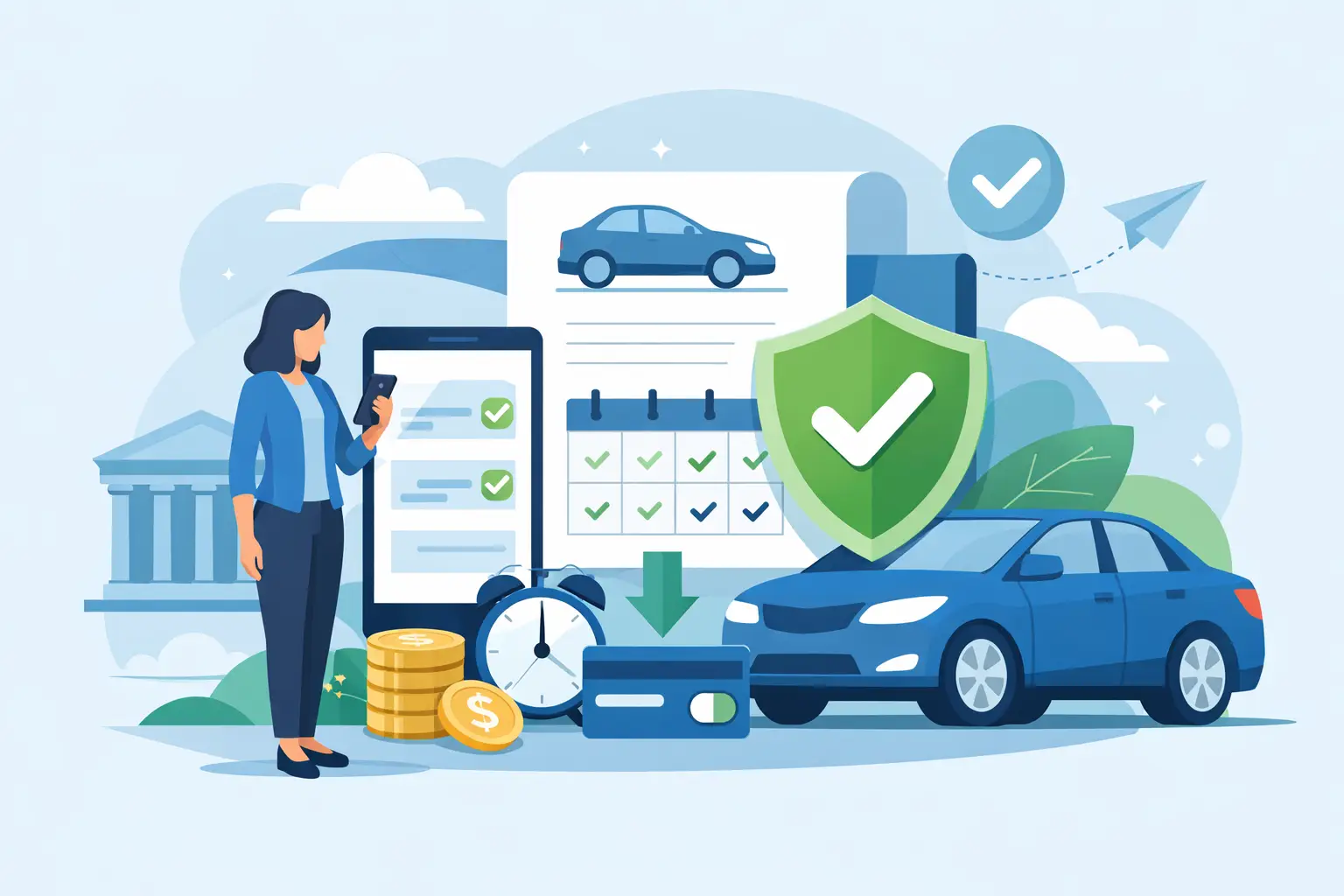
A borrower misses a payment after a collision, not because they stopped caring about their loan, but because their vehicle is sitting in a body shop while transportation costs stack up fast. That is the real setting for any case study reducing missed auto payments in retail automotive finance. Missed payments often start with a disruption event, then spread into collections pressure, customer frustration, and avoidable portfolio drag.
For lenders, lessors, and dealers, this matters because payment behavior is not shaped by income alone. It is shaped by what happens when a customer suddenly loses use of the vehicle they still have to pay for. If the monthly obligation remains fixed while mobility disappears, even a good customer can slide into short-term delinquency.
That creates a practical question. What happens when a finance or dealership partner adds a vehicle payment reimbursement membership to the deal structure and gives customers a defined source of relief after a covered event? The answer is not theoretical. It shows up in payment continuity, customer retention, and backend performance.
The operating problem behind missed payments
Most delinquency conversations focus on underwriting, collections cadence, and borrower risk segmentation. Those are valid levers, but they do not fully address event-driven payment disruption. A customer can look stable at origination and still become vulnerable when an accident, repair event, or total loss changes the household budget overnight.
At that point, the auto payment is competing with rental costs, rideshare expenses, towing bills, deductibles, missed work hours, and replacement transportation. The lender still expects the payment. The dealer wants to preserve the relationship. The customer wants to stay current, but cash flow is under pressure.
This is where many portfolios lose ground. Not because the account was always weak, but because no product or process was in place to help the customer bridge the disruption window.
A case study reducing missed auto payments in practice
Consider a mid-sized dealer group with an affiliated finance operation serving a mix of prime, near-prime, and non-prime customers. Its leadership team noticed a pattern in early-stage collections. A meaningful share of missed or delayed payments followed collision repairs, mechanical damage events, or total-loss situations. Customers were not necessarily defaulting from long-term inability to pay. They were reacting to sudden out-of-pocket stress.
The group already had standard collections workflows and service follow-up processes. What it lacked was a monetizable customer-protection product designed specifically around payment continuity. Instead of treating each disruption as a collections problem after the fact, the dealer group introduced a membership program at the point of sale that could reimburse a monthly car payment when a covered event left the vehicle unusable. The structure also offered limited immediate travel and miscellaneous expense assistance in the first year, plus replacement vehicle support after a total loss based on the original down payment.
That change mattered because it shifted the conversation from reactive collections to preventive protection. Customers who enrolled had a clearer path to stay current when a serious vehicle event interrupted normal transportation.
What changed after implementation
The first operational change was simple. F&I managers had a more relevant value conversation. Instead of selling another abstract add-on, they could present a product tied to a problem customers understand immediately: if you cannot use the car, you may still owe the payment.
The second change appeared after claims-related events. Program administrators and account teams had a practical tool to point customers toward during hardship moments. That reduced the all-too-common cycle where the customer calls upset, asks for flexibility the lender may not be able to give, and then falls behind while trying to sort out transportation and repair costs.
The third change was financial. While exact outcomes vary by portfolio mix and program penetration, the dealer group observed fewer payment interruptions among enrolled customers after covered events than among similar non-enrolled customers. Delinquencies tied to vehicle unavailability were less likely to become missed-payment chains. That distinction matters. One skipped payment can become two quickly when a customer is also paying for rentals, rides, or a replacement down payment.
Why reimbursement works better than good intentions
Many organizations assume empathy and collections training are enough. They are not. A sympathetic phone call does not create cash flow. A payment reminder does not solve transportation disruption. Even payment extensions, when available, can push the problem forward rather than stabilize it.
A reimbursement-based membership addresses the actual pressure point. It helps preserve the customer’s ability to make the required payment when a covered event removes the vehicle from normal use. That is a different strategy from collections relief alone. It protects payment behavior at the moment it is most likely to break.
For lenders and lessors, that can support cleaner receivables performance. For dealers, it can support stronger customer goodwill while creating an additional F&I revenue opportunity. For BHPH operators, where payment continuity is especially sensitive to life disruptions, the benefit can be even more immediate.
The business case beyond collections
A strong case study reducing missed auto payments should never stop at delinquency metrics. The broader value is commercial.
When customers receive meaningful help during a stressful event, they remember who made that support available. That can increase trust in the selling dealer or financing partner. It can also improve the odds that the customer returns for service, replacement shopping, or future financing needs instead of disappearing after a negative experience.
There is also the product differentiation factor. Many F&I menus look interchangeable. Dealers and finance partners need offerings that are easy to explain, easy to position, and clearly tied to real ownership risk. Payment reimbursement stands out because it addresses a problem that customers rarely consider until it is already hurting them.
That creates a rare combination: a customer-facing benefit with direct backend value. It can generate revenue per deal while also supporting portfolio performance and retention. That is a stronger position than selling products that only help one side of the transaction.
Trade-offs and what decision-makers should evaluate
This is not a claim that every missed payment can be prevented. Some customers face broader financial hardship unrelated to vehicle events. Others may not enroll, may not qualify for reimbursement under the membership terms, or may delay communication during the claims process. Payment protection is not a substitute for underwriting discipline or collections execution.
But that is not the right standard. The right question is whether a targeted membership can reduce a meaningful category of preventable payment disruption while adding profit and customer value. For many automotive businesses, the answer is yes.
Decision-makers should evaluate program fit based on their portfolio profile, average monthly payment, claims-related disruption patterns, F&I penetration ability, and customer mix. A prime lease portfolio may use the product differently than a BHPH operation, but both face the same core issue: when the car is unusable, payment stress rises.
They should also consider execution. Results depend on sales team training, menu presentation, claim communication, and operational follow-through. A good product with weak dealership adoption will underperform. A good product that is clearly positioned as customer payment protection can become a reliable contributor to both customer care and gross profit.
Where this model fits best
The strongest fit tends to be organizations that care about both portfolio stability and retail performance. That includes franchised dealers looking for differentiated F&I income, independent dealers seeking stronger customer retention, lenders wanting to reduce event-driven delinquency, and leasing companies that understand how quickly a damaged or totaled vehicle can create account stress.
It is especially useful in environments where transportation is essential to income. In much of the United States, if the car is out of service, work attendance, childcare logistics, and day-to-day household operations are affected immediately. The borrower is not only managing a damaged asset. They are managing a disrupted life. That is why payment interruption often follows so quickly.
Programs like CPR For Cars are designed around that real-world pressure. They give partners a way to protect customers and the bottom line at the same time, without trying to force a collections solution onto a problem that starts much earlier.
The larger lesson from this case study
The most useful takeaway is not that ancillary products are good in general. It is that the right ancillary product can solve a specific business problem that standard finance operations do not solve well on their own.
Missed auto payments are often treated as a borrower failure. In many cases, they are really a disruption-management failure. When a customer loses use of the vehicle and no structured support exists, the account becomes vulnerable. When reimbursement support is already in place, the path to staying current becomes much more realistic.
For automotive finance leaders, that should sharpen the way products are evaluated. The question is not whether a membership sounds attractive on a menu. The question is whether it changes outcomes that matter – payment continuity, customer retention, service traffic, and revenue per deal.
That is where a case study reducing missed auto payments becomes more than a marketing story. It becomes a blueprint for protecting the customer relationship before a missed payment turns into a larger loss.









Leave A Comment