
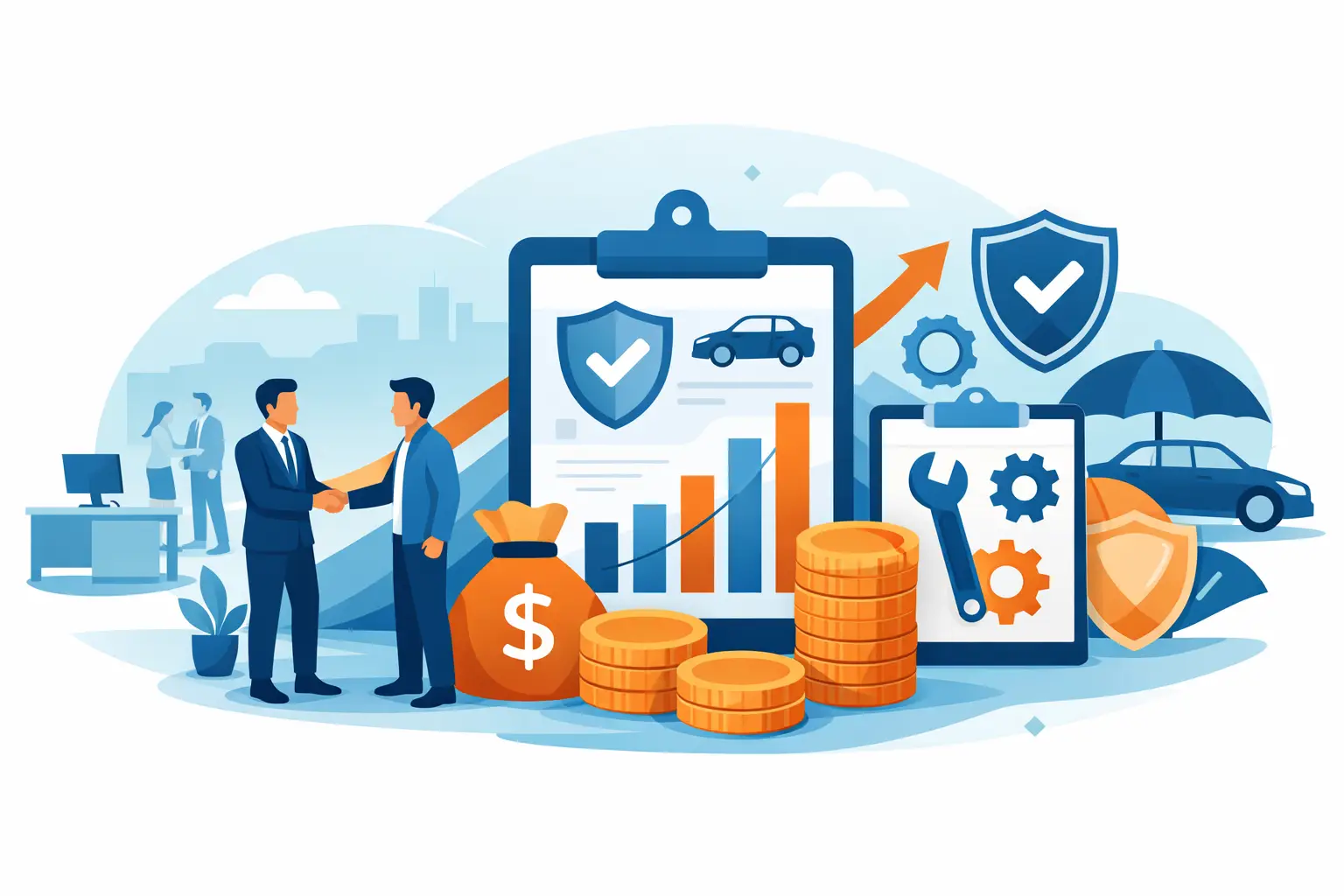
A product can look strong on a menu and still disappoint where it counts – in PVR, chargebacks, customer satisfaction, and repeat business. That is the real conversation around dealer profit per deal products. The best products do more than add gross to a contract. They support the customer after the sale, protect lender performance, and give the dealership another reason to stay connected throughout ownership.
For dealers, F&I leaders, lenders, and BHPH operators, that distinction matters. A high-margin product that creates confusion, weak claim performance, or limited real-world value may lift one deal and hurt the next ten. A product with a clear benefit, easy explanation, and visible customer relief has a much better chance of sticking – both on the deal sheet and in the relationship.
What dealer profit per deal products should actually do
Too often, dealer profit per deal products are judged only by front-end enthusiasm or per-copy income. That is part of the picture, but not the whole one. A worthwhile product should contribute to revenue while also supporting portfolio health, CSI, and retention.
That means the product needs to be easy for a customer to understand in the F&I office. It should answer a real ownership risk, not a manufactured one. It should also make sense for the dealership’s operating model. A franchised rooftop with a strong service lane may value return traffic differently than a BHPH store focused on customer payment continuity. A credit union program administrator may care more about member relief and repayment behavior than immediate reserve alone.
The point is simple. Profit per deal matters, but durable profit matters more.
The problem with one-dimensional backend products
Some ancillary products sell well because they are familiar. Others sell because they are heavily incentivized. Neither is enough by itself. If a product delivers little perceived value when a customer actually needs help, the store may feel the impact later through cancellations, complaints, poor reviews, or weakened trust.
That does not mean traditional products have no place. Vehicle service contracts, GAP, maintenance programs, and appearance protections can all be valuable in the right deal structure. But they do not solve every problem in the ownership cycle. In particular, many do not directly address what happens when a customer is suddenly without a usable vehicle and still facing a monthly obligation.
That gap matters more than many operators realize. When a car is sidelined by a covered event, the customer is often dealing with transportation stress, missed work, unexpected costs, and a payment that does not pause just because the vehicle is unavailable. From a dealership or lender standpoint, that is where financial strain can turn into payment disruption, dissatisfaction, and broken loyalty.
Why payment disruption deserves more attention
A customer who cannot use the vehicle but still owes the monthly payment is under pressure fast. That pressure shows up in ways dealers and finance partners know well – skipped payments, calls into servicing, frustration with the seller, and a weaker chance of repeat business.
This is where dealer profit per deal products can become more strategic. Instead of focusing only on repair coverage, replacement value, or cosmetic protection, some products address the payment burden itself. That changes the conversation from “What does this cover?” to “What happens when your customer cannot use the car and still has bills due?”
For finance sources and lessors, that is not a small distinction. Products that help preserve payment behavior can support account performance. For dealers, they can strengthen customer goodwill at the moment goodwill is most likely to be tested.
Dealer profit per deal products that create operational value
The strongest products are not just profitable to sell. They are practical to administer and easy for teams to present consistently. If your F&I office needs ten minutes of disclaimers and a complicated explanation to make a product land, penetration will be uneven. If the benefit is clear in one sentence, adoption usually improves.
That is one reason reimbursement-style memberships stand out. When structured well, they offer direct customer relief tied to a disruptive event that buyers immediately understand. If the vehicle becomes unusable due to a covered event, the customer may receive reimbursement for the monthly payment, along with help for immediate travel or miscellaneous expenses and support toward replacement after a total loss, depending on program terms.
That kind of benefit does two jobs at once. It gives the customer a practical safety net, and it gives the selling partner a differentiated product with revenue potential beyond the usual menu mix.
CPR For Cars is built around that exact logic. It is not positioned as insurance. It is a membership program designed to reimburse a customer’s monthly vehicle payment when a covered event leaves the vehicle unusable, while also helping with certain immediate expenses and replacement support based on program terms. For dealers, lenders, lessors, and BHPH operators, that creates a product story centered on customer relief, payment continuity, and backend income.
What to look for when evaluating dealer profit per deal products
The first question is not margin. It is relevance. Does the product solve a problem your customers actually face, and does it do so in a way your team can explain without friction?
The second question is performance beyond the sale. Some products are profitable at delivery but invisible afterward. Others can help maintain customer contact, improve return traffic, or reduce stress during a difficult ownership event. If your store cares about retention and service absorption, that difference is meaningful.
The third question is fit by channel. A franchised dealer, an independent used car store, a lease originator, and a BHPH operator do not all need the same product mix. A BHPH dealer may prioritize anything that helps the customer keep payments on track. A leasing company may focus on customer experience and continuity through the lease term. A lender may be interested in products that support borrower stability without adding unnecessary complexity.
Finally, assess whether the product helps your dealership stand apart. Plenty of stores offer the same familiar options. A product that is easy to position as customer-first and revenue-generating can strengthen the F&I presentation and help your team avoid sounding interchangeable.
The trade-off: high gross now or stronger value over time
Every operator wants better revenue per retail unit. The real question is how that revenue holds up over time. A product with aggressive gross but weak perceived value may create short-term lift and long-term drag. A product with solid margin and a compelling real-world use case may produce better consistency, stronger acceptance, and fewer downstream issues.
That is the trade-off many stores miss. The highest-gross item is not always the best business decision if it creates objection fatigue or fails the customer when it matters most. Products tied to real ownership disruption often earn more trust because the need is obvious. Customers know what a breakdown, accident, or total loss can do to their finances. They do not need to be sold on the existence of the problem.
How to make dealer profit per deal products work harder
If you want stronger results, start by reviewing your current menu through a wider lens. Look at product income, yes, but also at cancellations, customer feedback, lender concerns, and whether the product mix supports retention after delivery.
Then ask whether your team is selling benefits or just reciting coverage. The best product stories are plainspoken. They answer a practical concern and connect directly to the buyer’s monthly reality. In many cases, a payment reimbursement benefit is easier to understand than a more abstract promise of future value.
It also helps to train around outcomes. Your F&I managers should be able to explain how a product protects the customer and the dealership’s business interests at the same time. That dual value is what separates a throw-in backend item from a strategic product category.
Dealer profit per deal products should not be judged only by what they add on delivery day. The better measure is whether they keep helping after the customer leaves – through payment support, loyalty, return traffic, and a stronger reason to come back to your store instead of forgetting who sold the car. If a product can protect your customers and your bottom line at the same time, it deserves a serious place in your lineup.







Leave A Comment