
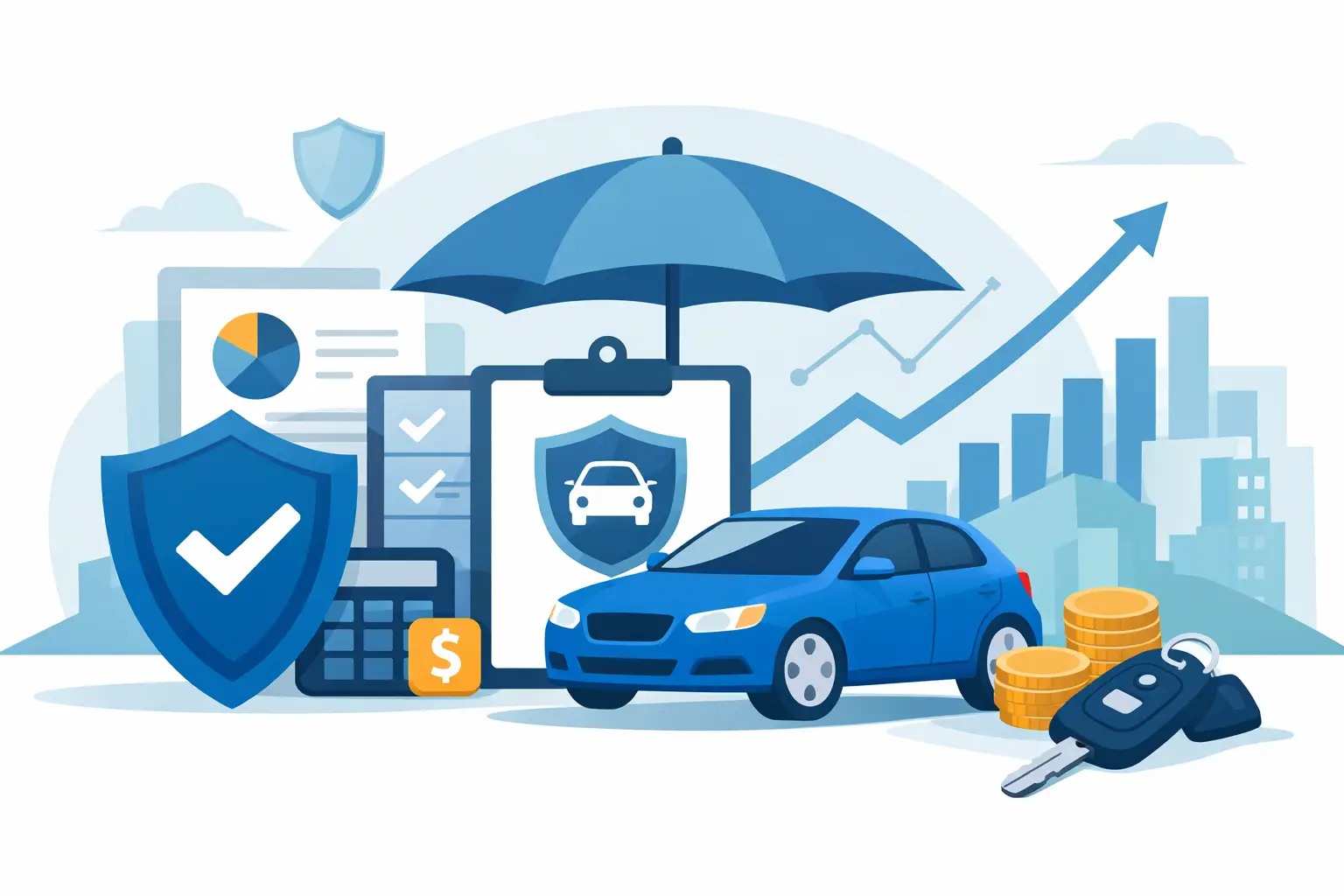
A customer’s vehicle is in the shop after a covered disruptive event. Their transportation is limited, repair decisions are stressful, and the monthly payment still arrives on schedule. That pressure point is driving the most meaningful trends in auto finance protection: products are being evaluated not only for what they cover, but for how well they preserve payment continuity, customer trust, and partner profitability.
For lenders, lessors, dealerships, credit unions, and buy-here-pay-here operators, the opportunity is larger than another line item in F&I. The right protection membership can give customers practical relief when they need it most while creating a differentiated, revenue-producing offering for the business that sold or financed the vehicle.
Protection Is Moving Closer to the Monthly Payment
Traditional automotive protection discussions often begin with the vehicle itself – repairs, parts, appearance, or ownership costs. The customer, however, may be worried about a more immediate issue: how an unexpected vehicle event affects the budget that supports their payment.
That is why payment-centered protection is gaining attention. When a covered event leaves a vehicle unusable, a program that reimburses the customer’s monthly payment addresses a financial disruption that many vehicle products do not directly solve. It does not replace conventional coverage or eliminate a customer’s responsibilities. It provides a defined layer of relief at the point where transportation trouble can become payment stress.
For finance partners, that matters because a customer under strain is not just a customer-service concern. It can become a collections issue, a retention issue, and a long-term relationship issue. A payment reimbursement membership gives the partner a credible way to show customers that protection extends beyond the day of delivery.
The Strongest Products Serve the Customer and the Portfolio
Ancillary product decisions are no longer judged solely on penetration rate. Decision-makers want to know whether a product improves revenue per retail unit, fits the F&I process, supports portfolio performance, and gives customers a benefit they can clearly understand.
The best trends in auto finance protection reflect that dual standard. They combine a straightforward customer benefit with measurable business value. Payment continuity can reduce the pressure customers feel after an interruption. Immediate expense support can help them manage transportation and miscellaneous costs. A replacement-vehicle benefit after a total loss can give the customer a reason to return to the originating dealer.
This is where product design becomes strategically important. A benefit that looks attractive on a menu but does not connect to a real ownership problem will struggle to create lasting value. Conversely, a membership built around an understandable disruption – an unusable vehicle and a continuing payment obligation – gives sales teams a practical story to tell.
CPR For Cars is positioned around this need with a non-insurance membership that can reimburse a monthly vehicle payment after a covered event leaves the vehicle unusable. Eligible members may also receive up to $500 for immediate travel and miscellaneous expenses in the first year, plus up to $1,000 toward a replacement vehicle after a total loss, based on the down payment made with the original dealer. Those benefits help turn an unexpected event into an opportunity to protect the customer relationship.
Dealership Retention Is Becoming a Protection Metric
For years, aftermarket product value was often measured at the time of sale. That view is incomplete. The most valuable protection programs can influence what happens months or years later, when the customer needs assistance, a repair, or another vehicle.
A payment reimbursement membership can reinforce the customer’s connection to the dealership during a stressful moment. If a total loss creates a replacement need, a benefit tied to the original dealer gives the customer a tangible reason to come back. If a vehicle is being repaired, the customer is more likely to view the selling dealer as a resource rather than a distant point of purchase.
That does not mean every customer will return, and no product should be sold as a guarantee of repeat business. Service experience, inventory, communication, and pricing still matter. But protection can give dealerships another meaningful touchpoint – one tied to real financial relief rather than a generic retention campaign.
For fixed operations, the effect can be especially relevant. Better customer goodwill can support service-center return traffic, while a stronger ownership relationship can create more opportunities for future trade-in, replacement, and referral business.
F&I Teams Need Simplicity, Not More Friction
A growing product catalog does not automatically produce stronger F&I performance. If a product is hard to explain, has unclear customer value, or requires a long technical presentation, it can slow the deal and create inconsistent selling behavior.
The protection products gaining traction are easier to position in plain language. The conversation should not require a complicated script. A customer should be able to understand the core concept quickly: if a covered event leaves the vehicle unusable, this membership can help reimburse the monthly payment and may provide defined expense or replacement-vehicle benefits.
That clarity is valuable for compliance as well as sales. Teams should avoid describing a membership as insurance when it is not insurance, avoid promising benefits beyond the program terms, and explain covered events, reimbursement conditions, and limitations accurately. Clear presentation protects the customer, the dealership, and the product’s long-term credibility.
F&I managers should also evaluate how easily the program can be implemented. Training, menu placement, enrollment workflow, disclosures, claim-support expectations, and reporting all affect whether a product becomes a consistent source of income or an overlooked option.
BHPH and Specialty Finance Operators Are Focusing on Hardship Support
Buy-here-pay-here dealers and specialty finance operators have long understood that vehicle reliability and customer cash flow are closely connected. When transportation is interrupted, work schedules, family obligations, and payment behavior can all be affected at once.
For these operators, payment-focused protection can be particularly relevant because it acknowledges the customer’s real-world budget pressure. It is not a substitute for sound underwriting, servicing, or collection practices. It is another customer-care tool that can help reduce the impact of a qualifying disruption.
The trade-off is that the program must be administered with discipline. Operators should set accurate customer expectations, make sure staff understand the membership terms, and maintain a process for directing members to the appropriate support channel. A product that is sold carelessly can create confusion. A product that is explained clearly can strengthen trust at a critical moment.
Data and Accountability Are Raising the Standard
Partners increasingly expect more than a broad promise of added value. They want visibility into product performance. That means tracking enrollment, revenue, cancellations, customer inquiries, claims activity where applicable, repeat business signals, and the product’s effect on F&I consistency.
Not every metric will move immediately, and results will vary by market, credit profile, inventory mix, and sales process. Still, accountability matters. A finance company may prioritize payment continuity and customer experience. A franchised dealership may place greater emphasis on backend gross and service retention. A BHPH operator may focus on customer hardship and portfolio stability.
The product partner should be prepared to support those goals with a practical operating model, not just promotional language. The best relationships are built when the provider understands that each enrollment represents both customer protection and a business commitment.
The Next Advantage Is Meaningful Differentiation
Vehicle buyers are offered plenty of products. The challenge is not adding more choices for the sake of it. The challenge is offering something distinct, relevant, and easy to explain.
Payment reimbursement protection stands apart because it addresses a gap customers immediately recognize: a vehicle can be temporarily unavailable, but the payment obligation does not pause. When presented accurately, that message can help customers see the membership as a practical layer of support rather than another abstract add-on.
For automotive finance and retail leaders, the next step is to assess protection products through both lenses that matter: Will this provide meaningful relief when customers face disruption, and will it create durable value for our operation? Programs that can answer both questions clearly deserve a place in the F&I conversation.
Protecting customers and the bottom line starts with offering benefits that matter after the sale. Make payment continuity part of the value your organization delivers.









Leave A Comment