
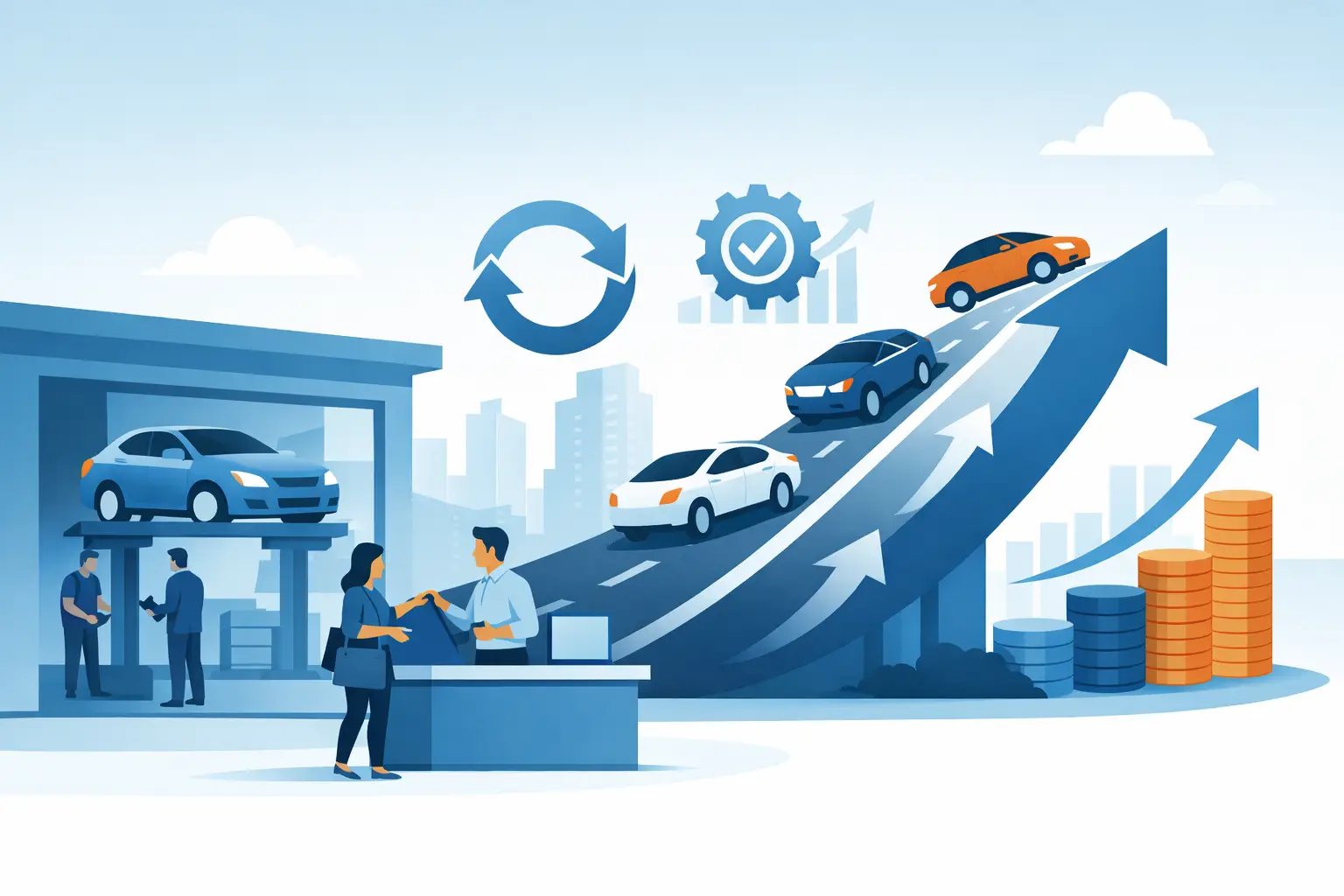
A vehicle sitting in a repair bay can create a customer relationship problem long before the repair is complete. The customer may be worried about transportation, missed work, and a monthly payment that is still due even though the vehicle cannot be driven. Stronger service center return traffic starts by addressing that moment with a benefit customers can understand and use.
For dealerships, lenders, lessors, and BHPH operators, return visits are not merely an operations metric. They are an opportunity to protect customer loyalty, generate fixed-ops revenue, support future sales, and reinforce the value of doing business with your organization. The challenge is giving customers a reason to return that feels meaningful when vehicle ownership becomes disruptive.
Why Service Center Return Traffic Matters Beyond Repairs
A customer who returns to the dealership service department is more likely to stay connected to the dealership throughout the ownership cycle. That relationship can lead to maintenance revenue, repair work, trade-in opportunities, replacement-vehicle sales, and stronger customer satisfaction. When the customer goes elsewhere after delivery, the dealership loses visibility into both the vehicle and the relationship.
This is especially relevant for financed and leased vehicles. Payment obligations do not pause simply because a collision, mechanical failure, theft, or other covered event leaves the vehicle unusable. A borrower facing that pressure may focus on immediate survival rather than loyalty to the dealer or lender that originated the transaction.
A practical payment-protection membership changes the conversation. Instead of leaving the customer to absorb the financial shock alone, the partner can offer a defined benefit that helps manage the car payment during an eligible disruption. The result is a customer-care solution that also creates a logical reason to reconnect with the originating dealer or participating service operation.
Build Return Visits Into the Ownership Experience
Service retention should not depend only on reminder emails, discounted oil changes, or a waiting-room coffee bar. Those tactics have a place, but they compete with independent repair shops and national service chains on price and convenience. A benefit tied to a real ownership problem is harder to ignore.
Car Payment Reimbursement provides a membership-based option designed to help when a covered event leaves a customer without the use of their vehicle. In addition to monthly payment reimbursement under the membership terms, customers may receive help with immediate travel and miscellaneous expenses during the first year. After a total loss, the program can also provide replacement-vehicle assistance based on the customer’s down payment with the original dealer.
That structure gives participating automotive businesses something more substantial to offer at the point of sale. It is not simply another add-on pitched as a vague promise. It is a customer-facing membership with clear outcomes: help during a disruption, support for payment continuity, and a path back to the dealership relationship.
The service department becomes part of the solution
When a vehicle is repairable, the customer needs dependable information, repairs, and a practical way to stay mobile. A dealership that has positioned itself as a resource before the problem occurs is in a stronger position to earn the repair visit when it does.
This does not mean every covered event will result in dealership service revenue. Collision repairs, insurer requirements, distance from the original dealer, and customer preference all affect where the work is performed. But a payment reimbursement membership gives the dealership a valuable reason to remain involved. It keeps the dealer relevant during a stressful event instead of disappearing after the contract is signed.
For total losses, the benefit can be even more direct. Replacement-vehicle assistance tied to the original dealer creates a compelling reason for the customer to return when they need another vehicle. That can protect future retail opportunity at the exact point when many customers would otherwise shop elsewhere.
Make the Benefit Easy for Customers to Remember
A membership only supports retention if customers understand what they purchased and know where to turn when trouble occurs. The F&I office, sales team, lender servicing staff, and service department should all be able to explain the benefit in plain language without overstating coverage.
The message should be consistent: if a covered event makes the vehicle unusable, contact the program administrator promptly and follow the claim process. The dealership can reinforce that it remains a resource for service needs and, after a total loss, for a replacement vehicle. Clear expectations are essential because this is a membership program, not traditional insurance.
Avoid burying the benefit in a stack of closing documents. Give customers a concise explanation at delivery and a follow-up communication after purchase. A simple welcome message can remind them of the payment-reimbursement benefit, immediate expense allowance, claim contact process, and the value of returning to the selling dealership when they need help.
Service advisors also need visibility. They do not need to sell the membership or interpret every term, but they should know how to recognize a member and direct that customer to the right next step. If an advisor learns that a vehicle is out of service after a covered incident, a timely reminder about available membership support can turn a difficult conversation into a loyalty-building moment.
Connect Fixed Ops, F&I, and Portfolio Performance
Too often, aftermarket products are evaluated only by F&I penetration and front-end revenue. Those numbers matter, but they do not capture the full business value of a program that helps customers manage payment disruption and gives them a reason to return.
For a dealership, the program can add revenue per retail or lease transaction while strengthening fixed-operations retention. For a lender or credit union, it can support borrower goodwill and payment continuity when a vehicle-related event disrupts household finances. For a BHPH dealer, where ongoing customer engagement and payment performance are particularly important, the benefit can create a more constructive conversation during hardship.
The best results come when each department has a defined role. F&I presents the membership as part of a broader ownership-protection conversation. Service reinforces the dealership as the right place to seek assistance and repairs. Sales follows up after a total loss or extended vehicle disruption. Lender servicing teams understand how the program may help a member who is concerned about making payments.
This coordination should be operational, not theoretical. Track membership penetration by store and producer, then compare member and non-member service retention where data is available. Measure repeat sales activity, claim-related customer contacts, payment performance indicators, and customer feedback. The exact metrics will vary by business model, but leaders should look beyond product gross to assess the relationship value being created.
Protect Trust When Customers Need It Most
Service center return traffic cannot be manufactured through marketing alone. It is earned when customers believe the dealer, lender, or lessor will be useful after the sale. A payment reimbursement membership supports that trust because it addresses a problem customers immediately recognize: a vehicle can be unavailable while the monthly obligation continues.
The trade-off is that teams must communicate carefully. Do not imply that every repair, every accident, or every payment is automatically covered. State that benefits are subject to membership terms, covered events, limits, and required documentation. Accurate communication protects the customer experience and protects your organization from avoidable frustration.
Speed also matters. A customer who is bounced among a service advisor, finance office, lender, and third-party administrator will not feel protected. Establish an internal escalation path so employees know who can answer program questions, provide claim contact information, and follow up with customers who may need a replacement vehicle. The goal is not to promise what the program does not provide. The goal is to make sure a customer never feels abandoned during the process.
A Better Reason to Come Back
Discounts can bring a customer in once. A meaningful ownership benefit can keep the relationship active when it matters most. By pairing financial relief during eligible vehicle disruptions with a clear path back to the dealership, automotive businesses can turn a difficult event into a chance to demonstrate value.
Give your customers a reason to remember who stood behind them after delivery. When your teams can protect the payment, support the next step, and welcome the customer back, service retention becomes more than traffic. It becomes a stronger, more profitable customer relationship.






Leave A Comment