
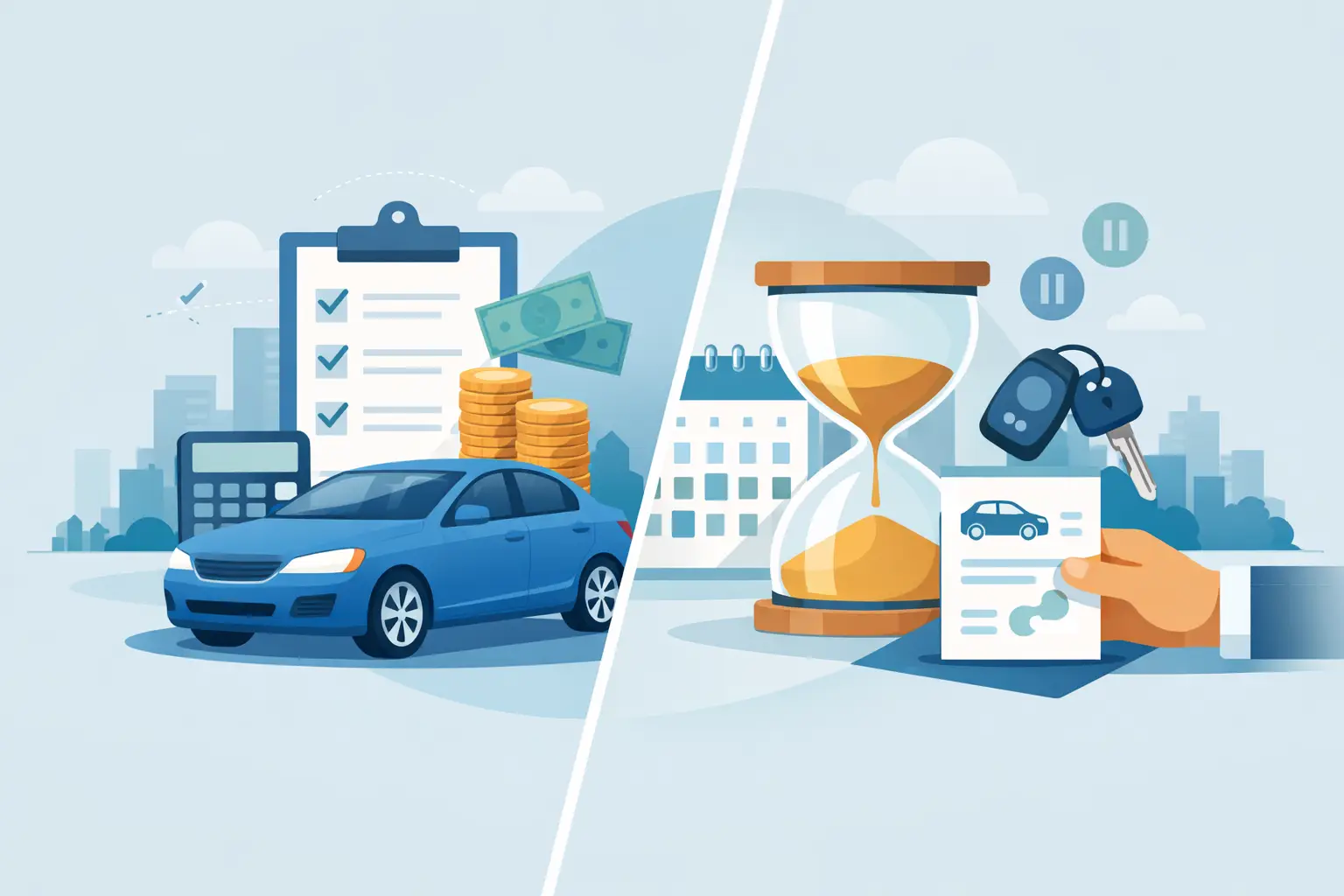
A vehicle is in the shop after a covered event, the customer still has a monthly payment due, and the lender or dealer gets the call nobody wants to handle: “What am I supposed to do now?” Vehicle reimbursement vs payment deferral is not a minor product distinction. It determines whether a customer receives financial relief now or simply moves an obligation further down the road.
For lenders, lessors, dealerships, and BHPH operators, that difference can affect payment continuity, customer goodwill, service-center return traffic, and the value of the F&I menu. A deferral may offer temporary breathing room. Reimbursement can help the customer manage the payment without extending the debt. The right fit depends on the event, the contract, and the business objective.
What Payment Deferral Actually Does
A payment deferral allows a borrower or lessee to postpone a scheduled payment, usually by moving it to the end of the contract term. It is commonly handled as an account accommodation after a hardship, repair disruption, or other qualifying circumstance.
The immediate appeal is obvious. The customer may avoid making a payment in the current month, which can reduce pressure during an unexpected expense. For a lender, a carefully managed deferral can be preferable to a missed payment or a delinquency escalation.
But a deferred payment is generally not erased. The customer remains responsible for it later. Depending on the agreement and applicable requirements, the contract term may be extended, interest treatment may vary, and the customer may still have to manage deductibles, rental transportation, repair-related costs, and other expenses while the vehicle is unavailable.
That matters at the point of sale. If a customer hears “we can defer your payment,” they may understandably interpret that as payment relief. Once the payment reappears at the back end of the loan or lease, that perception can change. Deferral is a servicing tool. It can be valuable, but it is not the same as a customer benefit that reimburses an eligible payment.
Vehicle Reimbursement vs Payment Deferral: The Core Difference
Vehicle payment reimbursement is designed to address a different problem. When a covered event leaves a vehicle unusable, an eligible membership can reimburse the customer’s monthly vehicle payment according to the program terms. Rather than moving the obligation to a later date, the benefit is intended to help cover it.
This distinction gives automotive partners a stronger ownership-experience message. The customer is not merely told to wait on the payment. They have a pathway to financial relief while their vehicle is out of service, subject to the membership’s covered events, eligibility requirements, limits, exclusions, and claim process.
CPR For Cars is structured as a non-insurance membership program for this exact gap. It provides reimbursement of a customer’s monthly car payment when a covered event makes the vehicle unusable. During the first year, eligible members may also receive up to $500 for immediate travel and miscellaneous expenses. After a total loss, the program can provide up to $1,000 toward a replacement vehicle based on the customer’s down payment with the original dealer.
Those additional benefits matter because a vehicle interruption rarely creates only one expense. A customer may be paying for rides, arranging temporary transportation, handling incidental costs, or trying to replace a totaled vehicle. A pure deferral does not automatically address those pressures.
Why the Difference Matters to Portfolio Performance
From a portfolio perspective, both approaches can support a customer facing a legitimate disruption. The operational outcomes, however, are different.
A deferral can provide a short-term account-management option. It may be appropriate when a customer’s challenge is temporary and the lender has established policies for granting payment extensions. It can help prevent an immediate missed payment, but it also creates additional servicing work and may extend the customer’s payment horizon.
Reimbursement supports the customer’s ability to make the scheduled payment during an eligible vehicle-related disruption. That can protect the customer’s cash flow at the moment it is under pressure and reduce the chance that a repair event turns into a payment problem. For a lender or lessor, the value is straightforward: fewer strained customer conversations and a benefit that reinforces payment continuity without relying solely on a contract extension.
There is no universal replacement for sound collections policies, underwriting, or hardship procedures. A reimbursement membership should complement those practices, not substitute for them. Still, it gives partners a proactive tool to present before the customer experiences a crisis.
The Dealer and F&I Opportunity
For dealerships, the comparison is also about product strategy. Payment deferral is usually an after-the-fact servicing decision. It does not create a differentiated backend product at delivery, and it does not give the dealership a clear, consumer-facing benefit to position alongside the vehicle purchase or lease.
Vehicle payment reimbursement can do both. It gives F&I teams a practical story that customers immediately understand: if a covered event makes the car unusable, the membership may reimburse the monthly payment and help with certain related expenses. That is a real-world protection conversation, not an abstract feature list.
The business case extends beyond per-deal revenue. A program built around vehicle disruption can strengthen the customer’s connection to the selling dealer. When a repair is needed, the original dealership is better positioned to remain part of the ownership experience. That can support service-lane traffic, future trade opportunities, customer retention, and goodwill when the customer is under stress.
For BHPH dealers, the case may be even more direct. Customers often have less room in their monthly budgets for an unexpected transportation interruption. A product that helps protect an eligible payment can add value to the deal while supporting a more stable payment relationship. The benefit should always be presented accurately, with clear explanation of what is covered and how claims work.
When a Deferral May Still Be the Right Tool
Payment deferral should not be dismissed. There are situations where it is the practical answer. A customer may be facing a short-term income interruption unrelated to a vehicle event, or the event may not qualify under a reimbursement membership. In those cases, an account accommodation may be the most appropriate path available.
Deferral may also be useful when timing is the immediate concern and the customer needs a servicing solution before other assistance can be evaluated. Lenders should apply their established policies consistently and make sure customers understand whether the payment is moved, how the maturity date changes, and what obligations remain.
The key is not to position deferral as identical to reimbursement. One postpones a payment. The other may help pay it. Customers deserve that clarity, and partners benefit when their teams can explain it without overpromising.
How to Position Reimbursement Responsibly
The strongest sales conversation is specific. Avoid broad promises such as “your payment is covered no matter what happens.” Instead, explain that reimbursement applies when a covered event leaves the vehicle unusable and when the member meets the program requirements.
F&I managers and sales teams should describe the benefit in customer language: a covered disruption can create a payment problem even when the customer did nothing wrong. The membership is designed to help protect the monthly vehicle payment while the customer works through that disruption. If applicable, explain the first-year travel and miscellaneous expense benefit and the potential replacement-vehicle contribution after a total loss.
Compliance is part of the value proposition. Teams should distinguish a membership program from insurance, avoid changing coverage language, and rely on approved product materials for benefit limits, exclusions, waiting periods, documentation, and claim procedures. Clear expectations protect the customer, the dealership, and the partner relationship.
Choose a Product That Solves the Moment of Stress
The best aftermarket products do more than add another line item to an F&I menu. They give customers a credible answer when ownership becomes expensive at the worst possible time. Payment deferral can be a useful recovery option after hardship appears. Vehicle payment reimbursement gives partners a chance to deliver relief before that hardship becomes a delinquency conversation.
For automotive businesses focused on revenue, retention, and healthier customer relationships, that is the practical choice to evaluate: offer a benefit that helps customers keep moving forward when their vehicle cannot.










Leave A Comment