
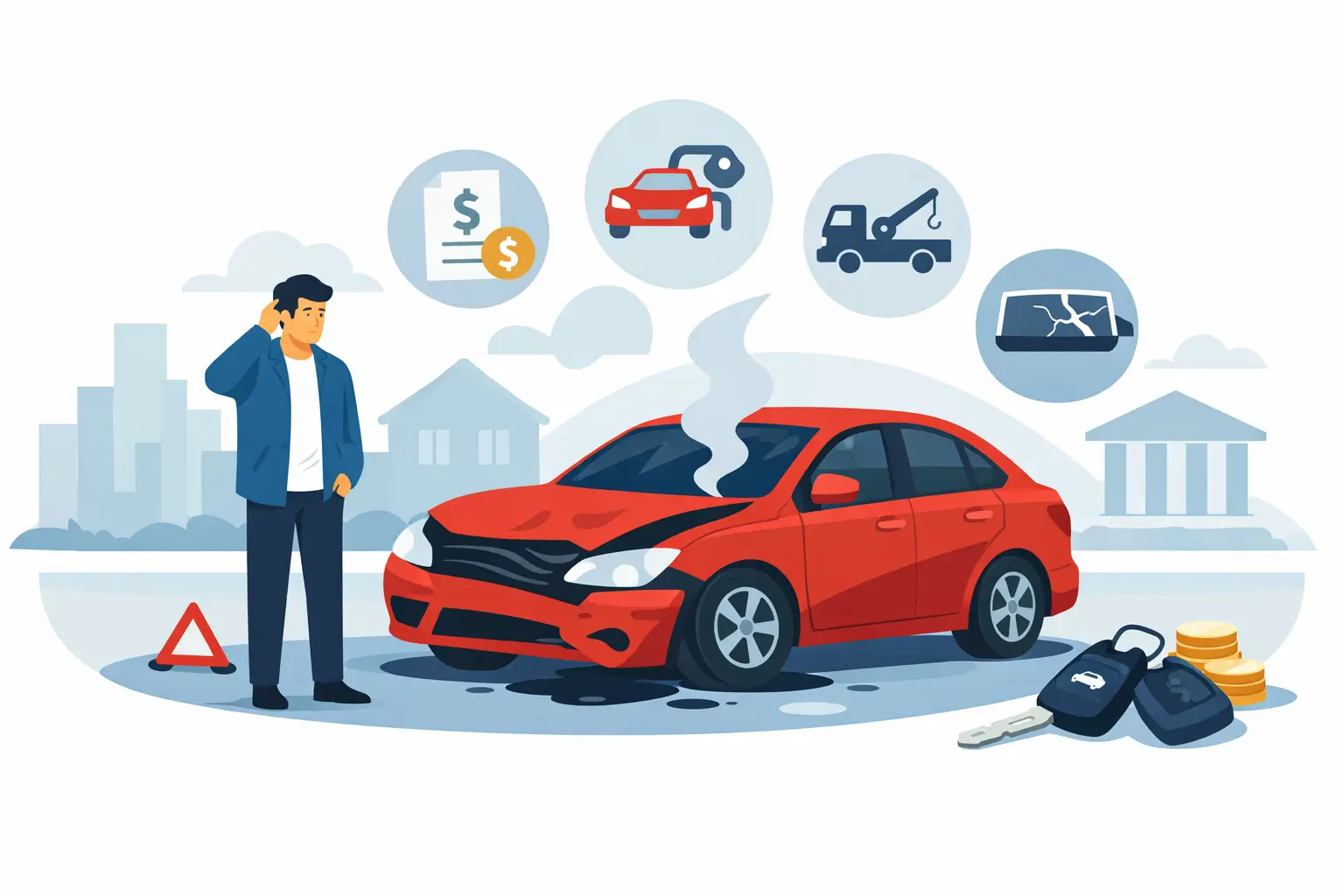
A borrower’s car is sitting at a body shop, the repair timeline keeps slipping, and the payment due date does not move. That is the real answer behind what happens when financed car is undrivable: the contract stays active, the customer’s stress rises fast, and payment performance can start to break down.
For automotive finance companies, leasing providers, dealers, and BHPH operators, this is not a side issue. It is a pressure point that affects collections, customer loyalty, service retention, and backend product strategy. When a vehicle becomes unusable after an accident, covered mechanical event, or other qualifying disruption, the problem is not limited to transportation. It becomes a cash-flow event for the customer and, very quickly, a portfolio event for the business.
What happens when financed car is undrivable for the customer
In most financed or leased vehicle situations, the customer still owes the monthly payment even if the vehicle cannot be driven. The finance agreement generally does not pause because the car is in the shop, waiting on parts, or declared unsafe to operate. The lender expects payment. The lessor expects payment. If the customer misses a due date, late fees, collection activity, and credit damage may follow.
From the customer’s point of view, this feels unfair, but it is common. They may be paying for a vehicle they cannot use while also covering rideshare costs, rental expenses, time away from work, towing charges, insurance deductibles, or out-of-pocket repair items. If the event stretches for weeks, the payment burden gets heavier. A customer who was current and stable can become financially squeezed in a short window.
That is where many businesses underestimate the issue. An undrivable vehicle does not just create inconvenience. It creates a competing bill environment. If a customer has to choose between rent, food, replacement transportation, and a car payment on a disabled vehicle, the auto payment can slip.
The contract usually survives the disruption
Customers often assume there is some automatic relief built into financing when the vehicle becomes unusable. Usually, there is not. Unless a separate product, lender hardship option, or contractual protection applies, the duty to pay remains in place.
This matters at the point of sale and throughout the life of the account. Dealers and finance partners who fail to address this reality leave customers exposed to a gap they did not expect. That gap can damage trust in the dealer, the lender, and the ownership experience as a whole.
There is nuance here. If the vehicle is a total loss, the process may shift into an insurance settlement, payoff review, and possible deficiency or replacement conversation. If the vehicle is repairable but sidelined for a long period, the customer may face an even more frustrating scenario because the obligation stays active while the outcome remains uncertain. In both cases, the underlying risk is the same: the payment does not stop just because the car does.
Why this becomes a business problem fast
When asking what happens when financed car is undrivable, decision-makers should focus on downstream performance. This is where the issue moves from customer frustration to measurable operational impact.
First, there is payment interruption risk. Even a reliable customer may miss or delay payments when transportation and repair costs pile up at once. That affects delinquency rates, collection effort, and staff workload.
Second, there is customer retention risk. A borrower who feels stranded may blame everyone involved in the transaction, even if the original deal was sound. If the only message they hear is that payment is still due, goodwill erodes quickly.
Third, there is service-center and dealership relationship risk. If the customer cannot stay mobile and financially stable during the repair period, they are less likely to view the store as a long-term partner. That can reduce return traffic and future sales opportunities.
Fourth, there is product differentiation risk. In a competitive finance and retail environment, dealers and lenders need more than rate and term to stand apart. If one provider offers a practical payment-relief solution for disruptive events and another does not, that difference becomes meaningful.
Where insurance helps – and where it does not
Insurance may cover physical damage, rental reimbursement, or total loss settlement depending on the claim and policy details. But insurance typically does not solve every payment continuity problem.
A customer may still owe a deductible. Rental coverage may be limited or unavailable. Mechanical breakdowns may not be covered by auto insurance at all. Repairs can be delayed by labor shortages or parts availability. In a total loss, settlement timing can still leave the customer in a tight spot before the account is resolved.
That gap matters. Businesses that rely on insurance alone to protect the customer experience are often leaving the monthly payment issue exposed. The customer does not separate these categories the way the industry does. They only know the vehicle is unusable and the bill is still due.
Why payment protection matters more than many dealers realize
A financed or leased vehicle is not just an asset. It is a recurring obligation tied to daily life. When the car goes down, the customer’s ability to earn income, get to work, care for family, and manage routine obligations may also be affected. That is why undrivable events create outsized emotional and financial pressure.
For the dealer, lender, or lessor, payment reimbursement support can reduce the shock. It gives the customer breathing room during a disruptive event and helps preserve account stability. That is not only good customer care. It is good business.
A product built around reimbursement during covered unusable-vehicle events supports two goals at once. It protects the customer from immediate payment strain and protects the business from avoidable performance deterioration. That dual value is exactly why ancillary products need to be judged on more than margin alone. The best ones defend the portfolio while strengthening the ownership experience.
What happens when financed car is undrivable without a support product
Without a support mechanism, the typical path is predictable. The customer calls the store or lender hoping payments can be paused. They learn the obligation still stands. They try to manage repairs and alternative transportation. Then one of three things usually happens.
The first outcome is that they keep paying but become dissatisfied and less loyal. The second is that they miss payments and enter collections pressure. The third is that they recover eventually, but with a negative memory attached to the dealer or lender relationship.
None of those outcomes are ideal. Even when the account remains performing, the experience can weaken future retention and referral value. Customers remember who helped when the situation became difficult.
A smarter operational answer for finance and retail partners
This is where a vehicle payment reimbursement membership becomes commercially valuable. Instead of leaving customers exposed during covered unusable-vehicle events, the business can offer a practical financial buffer tied to the monthly payment itself, along with support for immediate travel and miscellaneous expenses where applicable.
That kind of program is especially attractive because it addresses a problem customers understand instantly. They may not grasp every finance product in the menu, but they understand this: if the car cannot be driven, help with the payment matters.
For partners, the advantages are equally clear. It creates additional per-deal revenue, supports customer goodwill, helps reduce payment disruption, and gives stores and finance organizations a stronger story at the point of sale. It also reinforces the idea that the business is protecting both the customer and the transaction after delivery, not just closing the deal and moving on.
CPR For Cars is built around that exact need, offering a non-insurance membership designed to reimburse monthly car payments when a covered event leaves the vehicle unusable, while also providing defined support for immediate expenses and qualifying replacement needs. For dealers, lenders, lessors, and BHPH operators, that is not just a customer benefit. It is a monetizable protection strategy.
How to talk about this with customers at delivery
The strongest approach is direct and simple. Tell customers that if their vehicle becomes unusable, their loan or lease payment usually does not stop. Then explain that a reimbursement membership can help protect them from that disruption if a covered event occurs.
That conversation works because it is grounded in reality, not fear. It frames the product around a practical ownership risk that many customers have never considered. It also gives F&I teams a cleaner value story than abstract protection language.
The key is clarity. Do not position reimbursement support as insurance, and do not promise outcomes outside the program terms. Present it as what it is: a smart way to help customers stay financially stable when a covered event makes the vehicle unusable.
An undrivable financed vehicle can become a payment problem overnight. The businesses that prepare for that moment are the ones that protect customer trust, account performance, and long-term revenue at the same time.










Leave A Comment