
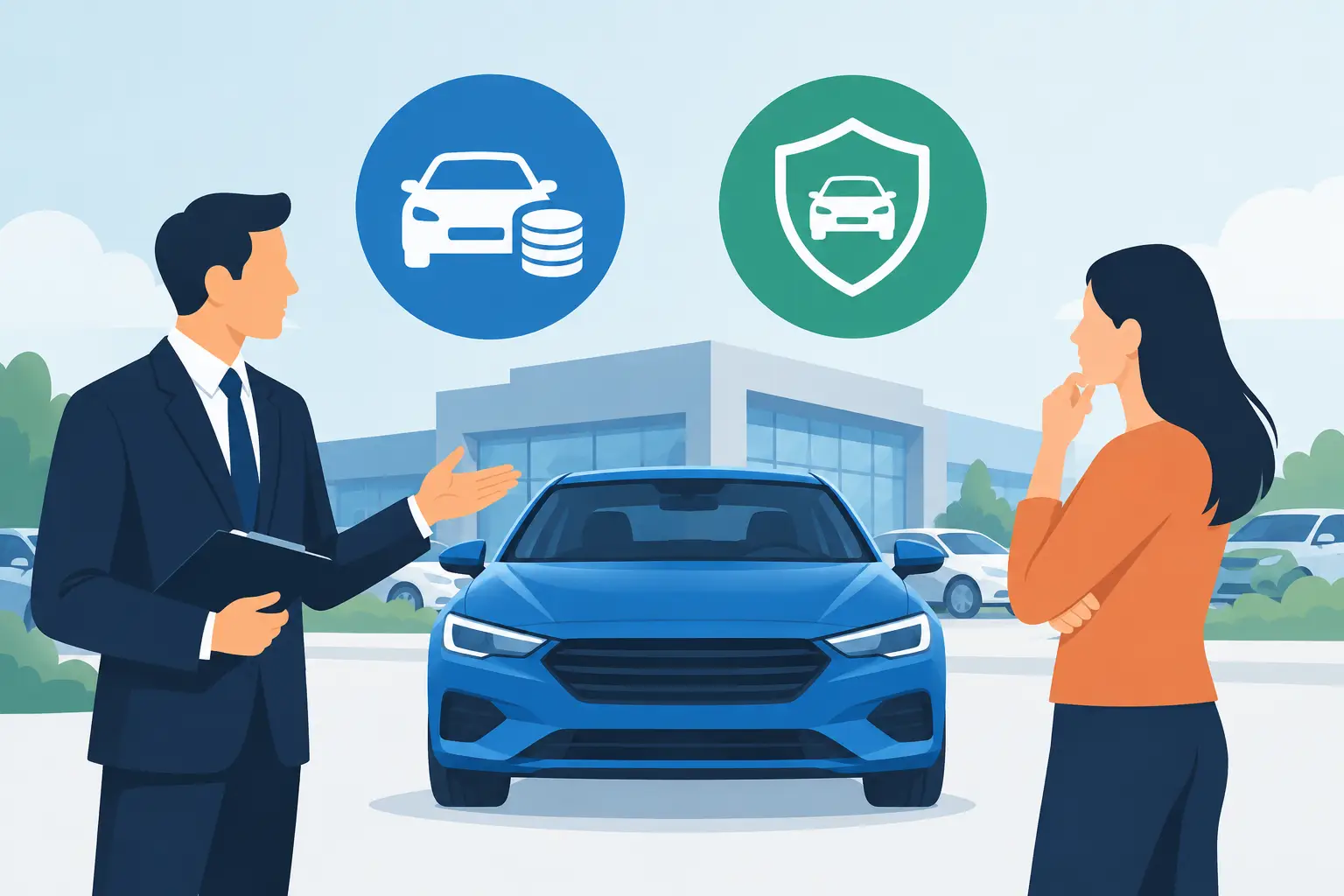
A customer can do everything right – make the down payment, sign the contract, maintain insurance, and pay on time – then lose the use of their vehicle after an accident or covered mechanical event. That is where the car payment aid versus GAP conversation matters. These products address different financial pressure points, and treating them as interchangeable can leave customers disappointed while leaving meaningful F&I revenue and retention opportunities on the table.
For lenders, lessors, dealerships, and buy-here-pay-here operators, the better question is not which product wins. It is whether your menu gives customers practical help before a disruptive event becomes a payment problem, a missed relationship opportunity, or a preventable loss of goodwill.
Car Payment Aid Versus GAP: Different Problems, Different Value
GAP generally addresses a specific total-loss financial gap. When a financed or leased vehicle is declared a total loss or stolen and not recovered, the customer’s primary auto insurer may pay the vehicle’s actual cash value. If that amount is less than the remaining loan or lease balance, GAP may waive or cover some or all of the difference, subject to the agreement terms and exclusions.
That is a valuable protection. Depreciation can move quickly, especially in the early years of a loan. A customer who owes more than the insurance settlement can face an unexpected balance on a vehicle they no longer have. GAP helps protect against that outcome.
Car payment aid, by contrast, is designed around the disruption that occurs while the customer still has an active payment obligation and cannot use the vehicle due to a covered event. The central benefit is monthly payment reimbursement, not the payoff of negative equity after a total loss. It can help a customer remain current when a vehicle is unavailable for repair, creating a direct bridge between a mobility interruption and payment continuity.
The distinction is operationally simple: GAP is focused on the balance after a qualifying total loss. Car payment reimbursement is focused on the monthly obligation during a covered period of vehicle unavailability. One can matter at the end of a vehicle’s ownership or lease cycle. The other can matter during the stressful weeks when the customer is trying to keep life moving.
Why GAP Alone Does Not Solve Payment Disruption
GAP is often familiar to consumers and established within dealership and lender product portfolios. But it is not designed to reimburse a regular monthly vehicle payment simply because a vehicle is in the shop, damaged, or otherwise unusable. Unless the event becomes a qualifying total loss under the customer’s agreement, the customer may still be responsible for the payment, insurance, rental transportation, and other everyday costs.
That creates a difficult moment for borrowers. Their vehicle may be unavailable, yet the note remains due. They may need rideshare services, rental transportation, or help getting to work. Even financially stable customers can feel the squeeze when a disruption adds costs without removing existing obligations.
For a finance company, this is not only a customer-care issue. Payment stress can affect customer satisfaction, call-center volume, collection activity, and long-term loyalty. For a dealership, the event is a test of the relationship formed in the F&I office. If the only answer is, “Your GAP product does not apply,” the customer may remember the gap in support more than the protection they purchased.
A payment reimbursement membership gives the F&I conversation a more complete answer. It recognizes that ownership disruption is not limited to a total loss and that a borrower’s immediate concern is often the next payment, not a future settlement calculation.
Where Car Payment Reimbursement Fits
Car payment reimbursement is not insurance and should be presented according to the specific membership terms, covered events, reimbursement limits, waiting periods, and exclusions. That clarity is essential for compliant selling and for setting the right customer expectations.
When structured properly, however, it provides a straightforward value proposition: if a covered event leaves the vehicle unusable, the membership can reimburse the customer’s monthly vehicle payment. That benefit speaks directly to a concern every borrower understands because the payment amount and due date are already part of their monthly budget.
CPR For Cars also supports the first-year disruption period with up to $500 for immediate travel and miscellaneous expenses, while offering up to $1,000 toward a replacement vehicle after a total loss based on the customer’s down payment with the original dealer. These benefits are separate from the standard GAP purpose. They help create a customer-support story that extends from immediate inconvenience to the possibility of replacement.
For the customer, that can mean fewer financial surprises after an unexpected vehicle event. For the originating dealer, it can reinforce the reasons for returning to the dealership when it is time to repair, replace, or purchase again.
The Business Case for Offering Both
The strongest product strategy often recognizes that GAP and payment aid do not compete for the same customer need. They can complement one another. GAP addresses potential negative equity after a total loss. Payment reimbursement addresses active payment pressure when a covered event makes the vehicle unusable.
This difference has practical implications for product positioning. GAP can be presented as balance protection in a qualifying total-loss scenario. Car payment reimbursement can be presented as budget protection during a covered interruption. Customers do not need to understand complicated product mechanics to understand the difference between “help with what I still owe after a total loss” and “help with the payment I have due while my vehicle is out of service.”
For dealerships and BHPH dealers, adding a differentiated membership can also produce value beyond the initial product sale. It adds a monetizable F&I offering, supports customer goodwill, and helps create a reason for the customer to remain connected to the original dealer. When total loss replacement assistance is tied to the original dealer relationship, it can support repeat business rather than allowing the replacement transaction to disappear into the open market.
Lenders and lessors gain a complementary customer-care tool as well. A borrower who receives timely support during a difficult vehicle event may be better positioned to maintain payment behavior and view the finance relationship as responsive rather than transactional. That does not eliminate credit risk, and no product should be sold as a guarantee against delinquency. It does provide a relevant benefit at a point when financial strain can increase.
How to Position the Difference in F&I
A sales team does not need a long script to explain the car payment aid versus GAP distinction. It needs a disciplined, customer-first explanation. Start by identifying the problem each product addresses, then explain the circumstances in which each may help.
A clear conversation might sound like this: GAP can help if your vehicle is a qualifying total loss and the insurance settlement does not cover your remaining balance. Payment reimbursement can help when a covered event leaves your vehicle unusable and you still have a monthly payment to make. The exact benefits depend on the agreement terms, but the protections are designed for different moments.
That approach avoids overselling. It also avoids the common mistake of implying that GAP handles every hardship associated with an accident, theft, or repair event. Transparent positioning protects the customer, the dealership, and the program’s reputation.
Training should reinforce three habits. First, teams should never call a membership insurance if it is not insurance. Second, they should use approved benefit descriptions and avoid promises outside the contract. Third, they should connect the product to the customer’s actual payment obligation rather than relying on vague language about “peace of mind.” Specificity sells better and holds up better after delivery.
Choosing the Right Product Strategy for Your Portfolio
The right mix depends on your customer base, deal structure, and business objectives. A lender with a large portfolio of customers financing higher loan-to-value vehicles may see clear value in GAP availability. A dealership focused on improving retention, backend profitability, and service-center return traffic may also benefit from a payment reimbursement membership that delivers help during vehicle downtime.
Buy-here-pay-here dealers may find the payment continuity message particularly relevant because the customer relationship and payment performance are closely connected. Leasing operators can evaluate how a vehicle-unavailability benefit supports the lessee experience alongside their existing total-loss protections. Credit unions and banks can consider whether the added member value aligns with their service model while giving borrowers a practical response to unexpected disruption.
There is no one-size-fits-all menu. The opportunity is to avoid forcing one product to solve a problem it was never built to address. A portfolio designed around both total-loss exposure and active payment interruption creates a more credible protection story.
When a customer’s vehicle becomes unusable, the next payment does not pause just because life did. Give your customers a protection option built for that moment, and give your business a stronger reason for them to stay connected when the road gets difficult.










Leave A Comment