
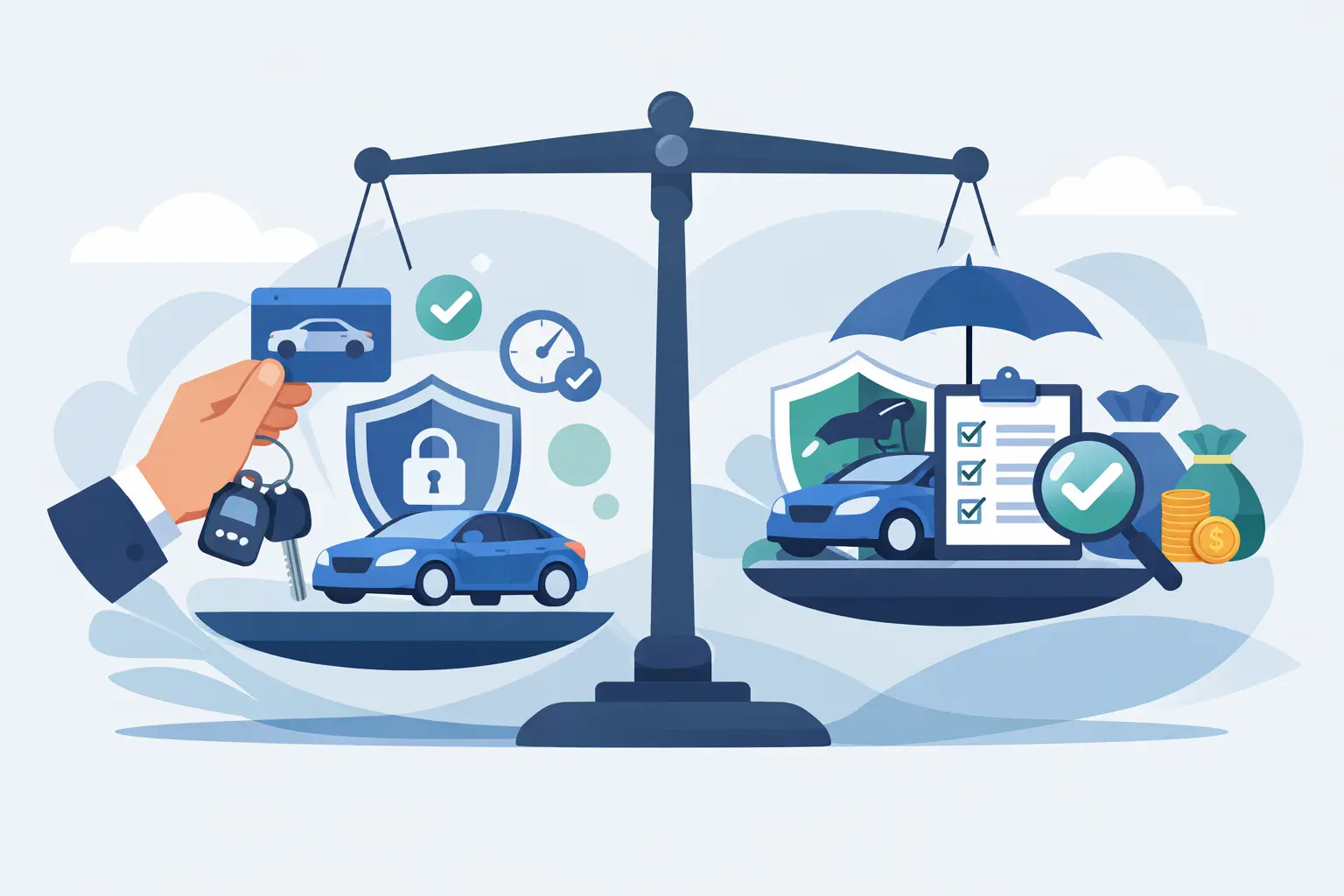
A vehicle is disabled after a covered event, the customer still has a payment due, and the lender or dealership is left managing a preventable strain on the relationship. That is the practical question behind, “are car memberships insurance products?” For automotive partners, the answer is not a marketing label. It depends on how the program is structured, administered, disclosed, and regulated in the states where it is offered.
A properly designed car payment reimbursement membership can provide meaningful financial relief without operating as traditional auto insurance. It can also create a differentiated backend offering that supports payment continuity, customer goodwill, and service-center return traffic. The distinction matters because lenders, lessors, dealers, and BHPH operators need products that protect their customers and their bottom line without creating avoidable compliance exposure.
Are Car Memberships Insurance Products?
Not automatically. A membership is not insurance simply because it provides a benefit after a disruptive vehicle event. Insurance generally involves the transfer of risk to an insurer in exchange for a premium, with benefits governed by an insurance policy and regulated under state insurance law.
A membership program may be structured differently. Rather than insuring the vehicle itself or paying to repair collision damage, it can provide contractual reimbursement or stated member benefits when defined eligibility requirements are met. For example, a program might reimburse a monthly vehicle payment when a covered event leaves the vehicle unusable. It may also provide a set amount for immediate travel and miscellaneous expenses or toward a replacement vehicle after a qualifying total loss.
That does not mean every product called a “membership” falls outside insurance regulation. States look at substance, not just terminology. The program’s benefit trigger, funding model, contractual obligations, marketing language, claims process, and risk assumption can all affect how it is treated. Partners should work with qualified legal and compliance professionals before launching any ancillary product in a particular jurisdiction.
The Operational Difference Between Memberships and Auto Insurance
Traditional auto insurance is designed to address losses such as liability, collision, comprehensive damage, medical payments, and other policy-specific risks. The carrier evaluates covered losses under an insurance contract, often pays a repair facility or claimant, and manages the insurance claim process.
A payment reimbursement membership addresses a different customer problem: what happens to the borrower’s or lessee’s monthly obligation when they cannot use the vehicle after a covered event? The customer may have insurance for the physical damage, yet still face a rental gap, transportation costs, a delayed settlement, or a payment due date that does not pause while the vehicle is out of service.
That gap can become a portfolio issue. A customer under pressure may miss a payment, disengage from the dealer, or look elsewhere for their next vehicle. A well-structured membership gives the customer a defined source of relief while reinforcing the relationship with the originating finance, lease, or retail partner.
What the customer receives
The value is typically specific and easy to explain. Instead of open-ended damage coverage, the member receives stated benefits under the membership terms. CPR For Cars, for example, is positioned as a non-insurance vehicle payment reimbursement membership that can reimburse a monthly car payment when a covered event renders the vehicle unusable.
The program can also provide up to $500 for immediate travel and miscellaneous expenses in the first year. Following a qualifying total loss, it can provide up to $1,000 toward a replacement vehicle based on the customer’s down payment with the original dealer. These benefits address the financial disruption around a vehicle event, not the repair or replacement value of the vehicle itself.
What the partner gains
For a dealership or lender, the distinction is operational as well as legal. Auto insurance is generally not a dealership-owned profit center. A membership can be an aftermarket offering that produces additional revenue per transaction while delivering a benefit customers can understand at the point of sale.
It can also encourage a customer to return to the originating dealer for replacement-vehicle business after a total loss. When the benefit is tied to a replacement transaction with the original dealer, the dealership has a clearer opportunity to retain the customer rather than losing that sale to a competitor. For service departments, a product built around periods of vehicle unavailability can support more productive conversations when a customer faces a major repair or qualifying event.
Why Classification Matters to Automotive Partners
Calling a product “not insurance” does not settle the issue. Overconfident positioning is a poor substitute for thoughtful program design. The cost of getting this wrong can include regulatory scrutiny, inconsistent F&I disclosures, customer confusion, and a product that creates more friction than revenue.
Before presenting a membership, decision-makers should evaluate four practical areas:
- Benefit design: Benefits should be defined, limited, and tied to clearly described covered events and eligibility requirements.
- Contract language: Membership agreements, exclusions, reimbursement procedures, cancellation terms, and benefit caps should be understandable and consistent with the sales presentation.
- State-by-state review: Regulatory treatment can vary. A program suitable in one state may require different disclosures, registration, or adjustments in another.
- Sales and administration controls: F&I staff, BDC teams, collections personnel, and program administrators need a clear process for offering the membership and guiding members after an event.
This review protects both sides of the transaction. Customers should know that a membership is not a substitute for required auto insurance. Partners should know exactly what is being sold, how it is paid for, and what support a member receives when a covered event occurs.
How to Position a Non-Insurance Membership Correctly
The strongest sales message is straightforward: this is a financial relief membership designed to help when a covered event makes the customer’s vehicle unusable. It is not collision coverage, liability coverage, comprehensive coverage, or a promise to repair the vehicle.
Avoid vague language such as “full protection” or “covers your car.” Those phrases can confuse the customer and blur the line between a reimbursement membership and an insurance policy. Use the actual benefit: reimbursement of a monthly vehicle payment under the membership terms, plus defined support for immediate expenses and a potential replacement-vehicle benefit.
This clarity makes the product easier to sell. A customer who understands that their insurance may handle vehicle damage but not necessarily the monthly payment obligation can see the purpose quickly. The F&I professional does not need to turn the presentation into a legal lecture. They need a clean explanation of the trigger, the benefit amount, the key limitations, and the enrollment decision.
The Revenue Case Is Stronger When the Customer Value Is Real
Ancillary products lose momentum when they are presented only as a payment add-on. A membership earns its place in the menu when the dealership can connect it to a real ownership problem: the customer can be temporarily without transportation and still owe the lender.
For lenders and leasing companies, payment disruption is more than a customer-service issue. It can affect collections workload, customer satisfaction, and portfolio performance. A reimbursement benefit will not eliminate every delinquency risk, and it should never be portrayed as a guarantee of payment performance. But it can reduce pressure on customers dealing with a qualifying vehicle event at exactly the point where financial stress is highest.
For BHPH dealers, the value can be especially direct. The relationship is often closer, the impact of a missed payment is immediate, and preserving customer trust is essential to repeat business. A membership that offers defined relief can be a differentiator in a market where many buyers have limited financial margin.
Questions to Ask Before Adding a Car Membership Program
The right program is not simply the one with the highest margin. It is the one your team can explain confidently, administer consistently, and stand behind when a customer needs help.
Ask whether the benefit addresses a recognizable payment disruption. Review how quickly reimbursements are processed and what documentation is required. Confirm whether the replacement-vehicle benefit can drive retained business to your dealership. Examine training, enrollment workflow, cancellation handling, reporting, and customer support. Finally, confirm that the provider has a disciplined approach to compliance and state-specific requirements.
A good membership should strengthen your customer promise, not complicate it. If your sales team cannot explain the program in plain language, or if your operations team cannot support it after delivery, the product will not produce the loyalty or performance you expect.
The opportunity is clear: offer customers practical relief when their vehicle is unavailable, while creating a measurable reason for them to remain connected to your finance, lease, and dealership ecosystem. Build the program around transparent benefits, disciplined compliance, and a customer experience worth returning for.










Leave A Comment