
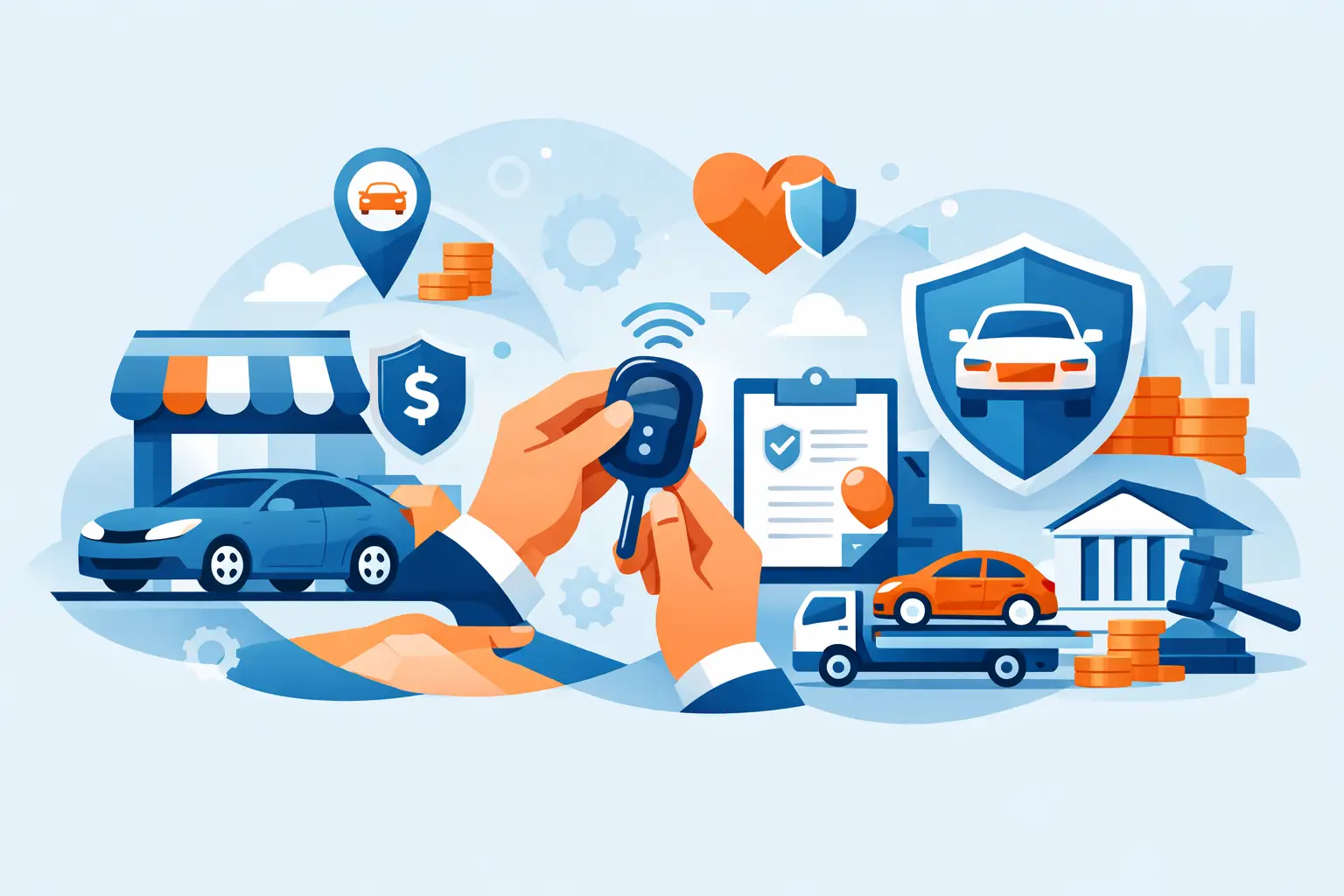
Every BHPH operator knows the pressure point: you are not just selling a vehicle, you are managing payment performance month after month. That is why bhph ancillary product ideas matter so much. The right product does more than add backend gross. It helps keep customers on the road, paying, and connected to your dealership instead of disappearing at the first major setback.
Not every add-on belongs in a BHPH portfolio. Some products sound good in the F&I office but fall flat in collections. Others create customer confusion, weak participation, or little real value after the sale. For BHPH dealers, the strongest ancillary strategy starts with one question: does this product protect both the customer and the deal?
What makes BHPH ancillary product ideas worth offering
In a retail finance model, ancillary products often get evaluated on margin alone. In BHPH, that is too narrow. A product should support at least one of three outcomes: improve customer stability, create a stronger payment habit, or drive the customer back to your dealership for service and future business.
That changes the product mix. A flashy add-on with weak claims usage may not help your portfolio at all. A practical program that reduces disruption after a breakdown, on the other hand, can protect receivables, reduce friction, and build more goodwill when your customer needs it most.
This is also where trade-offs matter. A high-priced product can increase per-copy profit, but if it stretches affordability too far, it may hurt deal structure and long-term performance. A lower-cost product with clear benefits may produce better penetration, fewer cancellations, and more consistent value across your customer base.
8 BHPH ancillary product ideas that fit the model
1. Vehicle service contracts
This is still one of the most common products for a reason. Mechanical failures are one of the fastest ways a customer falls behind. When repair costs hit and the borrower has limited cash reserves, the monthly payment often becomes secondary.
A service contract can reduce that shock. For the dealership, it can also create service department traffic and a reason for the customer to stay engaged with your operation instead of going to an outside repair shop. The key is fit. Coverage has to align with the age, mileage, and condition of the inventory you sell. If the exclusions are too broad or the claim process is difficult, the product may create more frustration than loyalty.
2. GAP or total loss protection
BHPH customers often have little room to absorb a total-loss event. If a vehicle is declared a total loss and the outstanding balance exceeds the settlement value, the customer can be left with a deficiency and no transportation.
That is why total loss protection remains one of the most practical BHPH ancillary product ideas. It addresses a real financial gap and can reduce the fallout from a severe event. It also helps preserve the customer relationship when things go wrong. Dealers should still review product structure carefully, because terms and payout methods vary, and clarity at the point of sale matters.
3. Car payment reimbursement memberships
This category deserves serious attention because it aligns directly with the BHPH risk model. When a covered event leaves a vehicle unusable, the customer is suddenly dealing with repair stress, transportation costs, and pressure on the monthly budget. That is exactly when payment disruption starts.
A car payment reimbursement membership addresses the problem from the customer’s side and the dealer’s side at the same time. It can help reimburse monthly vehicle payments during a covered event, provide funds for immediate travel or miscellaneous expenses, and support replacement vehicle costs after a total loss based on the original down payment. For a BHPH dealer, that means a product built around payment continuity rather than just repair benefits.
This is where CPR For Cars stands apart. It gives dealers a revenue-generating membership product that offers tangible customer relief while supporting retention, service return traffic, and stronger deal performance. For BHPH operators looking for differentiation, that combination is hard to ignore.
4. Tire and wheel protection
Road hazard damage is common, expensive, and disruptive. For many BHPH customers, a damaged tire is not a minor inconvenience. It is a budget event. If the customer cannot replace the tire quickly, the vehicle may sit. If the vehicle sits, commuting gets harder. If commuting gets harder, income and payment behavior can follow.
Tire and wheel protection can be a strong fit in markets with rough roads, potholes, or high daily mileage usage. It is especially useful when customers rely on the vehicle for essential commuting. The limitation is that not every customer sees the value immediately, so presentation matters. This product sells best when framed around keeping the customer mobile, not around accessories.
5. Key replacement programs
Lost or damaged keys are more expensive than many customers expect, especially with modern fobs and programming requirements. In BHPH, an event that seems small can still turn into a missed shift, towing expense, or avoidable collection problem.
A key replacement benefit is not the highest-ticket product in the box, but it can be an easy yes because the value proposition is simple. Customers understand the risk. Dealers appreciate the affordability and straightforward administration. It may not change a portfolio on its own, but it can strengthen your overall ancillary offering when bundled correctly.
6. Limited warranties tied to dealership service
Some BHPH dealers have strong service operations and want products that pull customers back into the shop. A limited warranty structured around dealership-performed repairs can support that goal. It creates another touchpoint with the customer and gives your team a better chance to manage repair quality, communication, and follow-up.
This approach is not right for every store. If your service capacity is already stretched, more return traffic may create operational strain. But for dealers with the right setup, service-linked protection can produce more than profit per deal. It can build habit, trust, and repeat business.
7. Emergency roadside assistance
Roadside assistance is common, but that does not make it irrelevant. A dead battery, lockout, tow, or flat tire can derail a customer fast. For BHPH buyers, small emergencies often become expensive ones.
The reason this product remains useful is not prestige. It is practicality. It can deliver immediate help in moments when the customer feels stranded, and that has real value in customer satisfaction. On its own, it may not be the strongest revenue driver, but as part of a broader protection menu, it supports customer care and can improve perceived value at closing.
8. Theft deterrent and recovery products
In some markets, theft risk is high enough to justify a serious look at recovery tools or deterrent systems. These products can help the customer recover a vehicle faster and help the dealer reduce losses tied to theft-related defaults or asset disappearance.
The decision here depends heavily on geography, inventory type, and claims history. In a lower-risk market, this may be a harder sell. In a theft-prone area, it can be one of the more relevant products you offer. Like any ancillary product, it works best when tied to a real operating problem, not just added for menu volume.
How to choose the right BHPH ancillary product ideas
The strongest mix starts with your book, not someone else’s. Look at why customers actually fall behind. Is the main issue repair cost, transportation disruption, total loss exposure, or everyday financial fragility after an unexpected event? Your ancillary lineup should answer those pressure points directly.
Then look at operational fit. Some products are easy to present and easy to administer. Others sound attractive but create training, compliance, and cancellation headaches. Penetration matters, but so does execution. A product your team understands and believes in will usually outperform one with a bigger theoretical margin and weaker real-world adoption.
Pricing discipline matters too. The best BHPH ancillary product ideas support affordability while adding value. If the monthly payment gets pushed beyond what the customer can realistically handle, the product may undermine the very deal it was supposed to protect.
The real test: does the product protect the account?
BHPH is different because the relationship does not end at delivery. You are still involved when the vehicle breaks down, when the customer hits a financial snag, and when payment behavior starts to shift. That makes ancillary strategy more important, not less.
The best products do not just generate profit on day one. They reduce disruption later. They help customers stay mobile, absorb financial shocks, and remain connected to your dealership. That is the standard worth using when you evaluate any add-on.
If a product strengthens customer stability and your bottom line at the same time, it belongs in the conversation. If it does not, there are better ways to build backend revenue. Smart BHPH growth comes from selling protection that still matters after the paperwork is signed.









Leave A Comment