
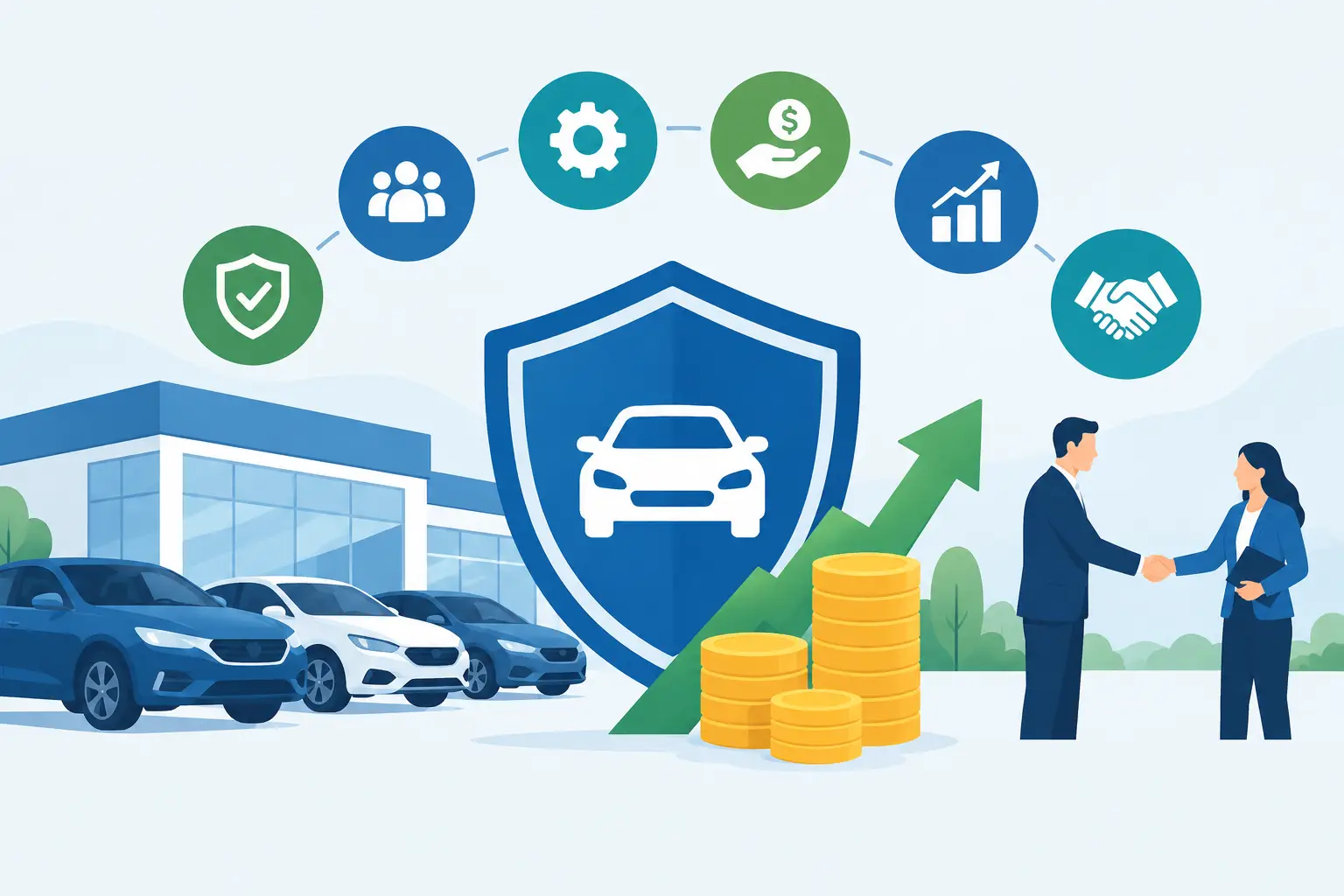
A customer drives off the lot confident in their purchase, then a covered vehicle event leaves that vehicle unusable weeks later. The repair bill is one problem. The monthly payment that still arrives is another. Strong dealer benefit examples start there: with a membership that provides practical customer relief while creating a new source of F&I income, protecting goodwill, and keeping the dealership connected to the customer after delivery.
For dealers, lenders, lessors, and buy-here-pay-here operators, the right ancillary product should not be a vague promise of value. It should produce visible outcomes in the deal, during the ownership cycle, and when an unexpected disruption tests the customer relationship.
Why Dealer Benefits Must Go Beyond the Sale
Backend products are often evaluated on one question: What does this add to revenue per retail unit? That question matters, but it is incomplete. A product that generates income at signing and gives customers meaningful support when their transportation is interrupted has a longer business life than a one-time add-on.
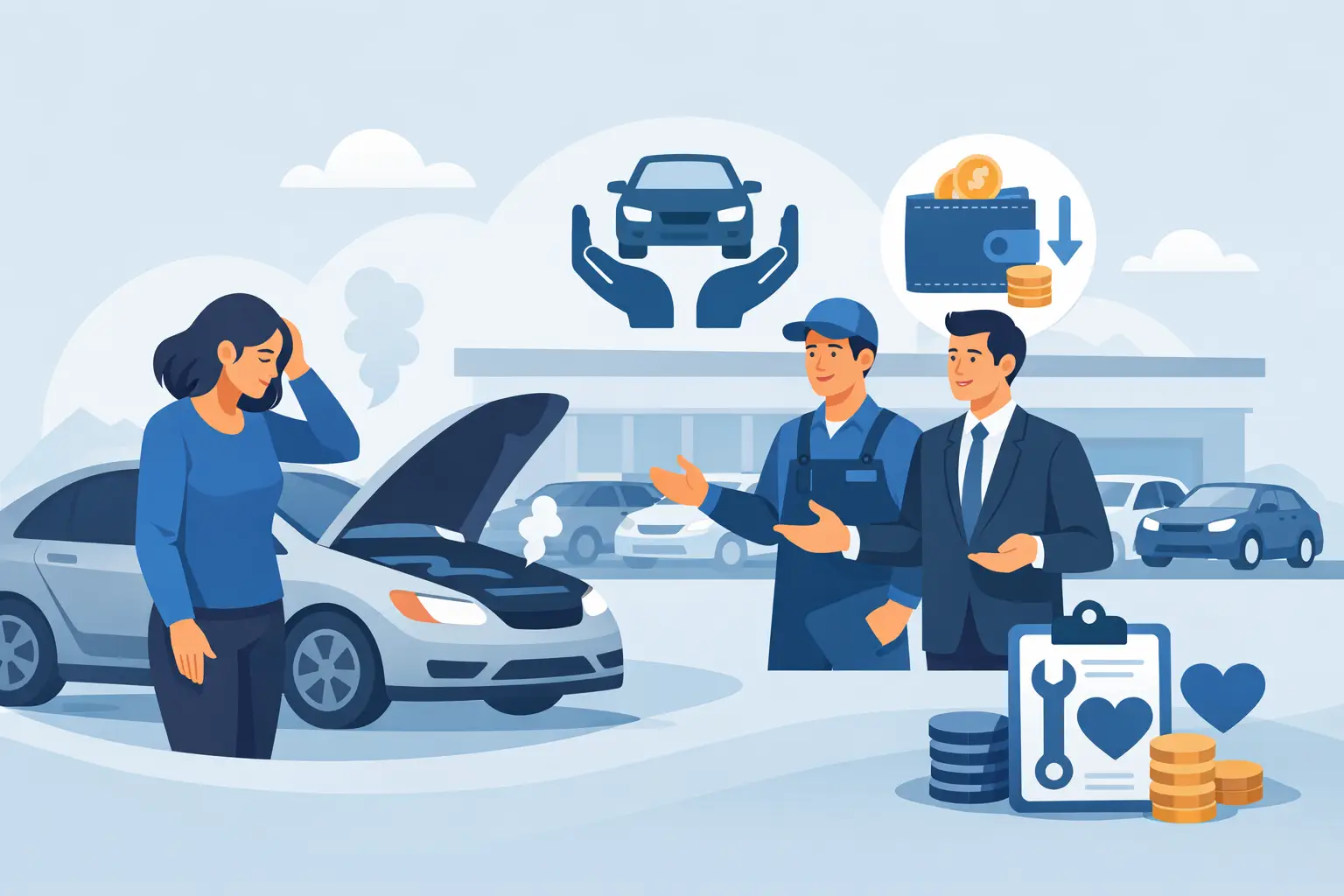
Car Payment Reimbursement is designed around a real ownership pressure point. When a covered event makes a vehicle unusable, the customer may still face a car payment, transportation needs, and the uncertainty of replacing a vehicle after a total loss. A membership can reimburse an eligible monthly vehicle payment, provide up to $500 for immediate travel and miscellaneous expenses in the first year, and offer up to $1,000 toward a replacement vehicle after a total loss, based on the customer’s down payment with the original dealer.
That combination creates a product story sales and F&I teams can explain in plain language. It also gives leadership a practical way to connect customer protection to performance.
7 Dealer Benefit Examples for F&I and Operations
1. Additional F&I revenue without changing the vehicle sale
The most direct benefit is incremental backend income. A payment-reimbursement membership gives F&I managers an additional product to present alongside the finance or lease agreement. It does not require discounting the vehicle, changing the payment structure, or relying on a rate markup to create margin.
The trade-off is execution. A product only performs when the menu presentation is clear, compliant, and tied to a customer need. Positioning it as help when a covered event interrupts vehicle use is more credible than presenting it as another generic protection package.
2. A stronger answer to payment disruption
A repair-related or covered loss event can put customers in a difficult position: they may be paying for a vehicle they cannot use while also paying for rental transportation, rides, or other immediate needs. For lenders and BHPH dealers, that disruption can quickly become a collection concern. For franchised dealers, it can damage a relationship that took considerable time and marketing expense to earn.
Reimbursement support can help eligible members manage the monthly obligation during a covered event. It does not eliminate underwriting discipline or replace sound collections processes. It does give the customer a defined source of relief at the moment payment stress is most likely to rise.
3. More customer goodwill when the unexpected happens
Customers rarely remember a dealership only because the delivery was smooth. They remember who helped when ownership became difficult. A membership that addresses a real interruption can make the dealership feel like a long-term partner rather than a business that disappeared after the paperwork was signed.
This benefit is difficult to measure on a single report, but it appears in repeat consideration, referrals, reviews, and a customer’s willingness to return for their next vehicle. Goodwill is especially valuable when pricing, inventory, and financing options look similar across competing stores.
4. A reason to return to the original dealer
Service retention is one of the most valuable dealer benefit examples because it connects the F&I office to fixed operations. When the customer understands that their membership relates to vehicle-use disruption and can support a replacement purchase after a total loss, the original dealership remains part of the solution.
The replacement-vehicle benefit is particularly meaningful. Up to $1,000 may be available toward a replacement vehicle after a total loss, based on the down payment made with the original dealer. That structure reinforces the value of returning to the selling dealer instead of starting over with a competitor.
No membership can force every customer back to the store. Convenience, repair capacity, and the service experience still matter. But an intentional ownership benefit gives your team a legitimate reason to reopen the conversation.
5. Better differentiation in a crowded market
Most dealerships can advertise inventory, payment estimates, and fast approvals. Those offers are common. A monetizable membership that helps address the burden of a payment when a covered event leaves the vehicle unusable creates a more distinctive ownership proposition.
This is useful for independent dealers competing against larger groups, as well as lenders and leasing companies seeking a benefit beyond the standard contract terms. Rather than competing only on price, the business can show customers that it has built protection into the ownership experience.
The differentiation must be specific. Avoid broad claims that imply every repair or loss is covered. Train teams to explain the membership terms, covered events, eligibility requirements, and reimbursement limits accurately. Clear expectations protect the customer and the bottom line.
6. A product that supports lease and finance customer retention
Finance customers and lessees have different ownership paths, but both can experience the same frustration when a vehicle is unavailable and the payment remains due. A membership can be positioned as continuity support, not merely a repair-related feature.
For leasing operators, it can add value to a customer who expects predictable mobility and a managed ownership experience. For finance companies, banks, and credit unions, it can support borrower confidence by acknowledging a problem traditional payment schedules do not solve on their own. For BHPH dealers, it can complement a customer-care strategy while supporting a more stable payment relationship.
The best fit depends on the portfolio. Businesses with higher payment sensitivity, long loan terms, or customers who rely heavily on one vehicle for work and family transportation may see a particularly clear use case.
7. A practical, repeatable sales conversation
A valuable product must be sellable by real teams on a busy Saturday, not just compelling in a boardroom. Payment reimbursement is easy to frame around a straightforward question: “If your vehicle is unusable after a covered event, how would you handle the car payment and immediate transportation costs?”
That question moves the conversation from abstract product language to the customer’s actual budget. It also gives F&I managers a natural bridge to explain reimbursement of an eligible monthly payment, first-year immediate expense support, and replacement-vehicle assistance after a total loss.
CPR For Cars gives partners a proprietary-style membership they can incorporate into this conversation without positioning it as insurance. The presentation should always follow approved materials and disclosures, but the core message remains simple: protect the customer from a disruptive vehicle event while protecting the business relationship that follows.
How to Turn the Benefit Into Measurable Performance
The difference between a profitable program and an overlooked menu item is management. Start by defining the business objective. A dealership focused on backend gross may track penetration, product gross, and F&I manager consistency. A lender may place more weight on customer retention, payment continuity, and portfolio experience. A dealer group with a major fixed-operations strategy may also measure returning service and replacement sales.
Next, give the sales and F&I teams a concise customer-facing explanation. They should understand what the member receives, when benefits may apply, and what the membership is not. Overpromising creates cancellations, complaints, and compliance problems. Direct, accurate language creates trust.
Finally, review performance by store, channel, and customer type. If penetration is low, the issue may be presentation discipline, timing, pricing, or a weak explanation of the covered-event scenario. If customers decline because they do not understand the value, refine the conversation before assuming the product lacks demand.
The Business Case Is Strongest When the Customer Need Is Real
The best ancillary products do not ask customers to imagine a remote risk. They address a financial strain customers can recognize immediately: a vehicle becomes unusable, but the payment does not stop. That is why payment reimbursement can support both customer care and commercial performance.
Give your team a benefit they can explain with confidence, your customers support they can understand before trouble occurs, and your business another reason to earn the next service visit, the next vehicle sale, and the next referral.









Leave A Comment