
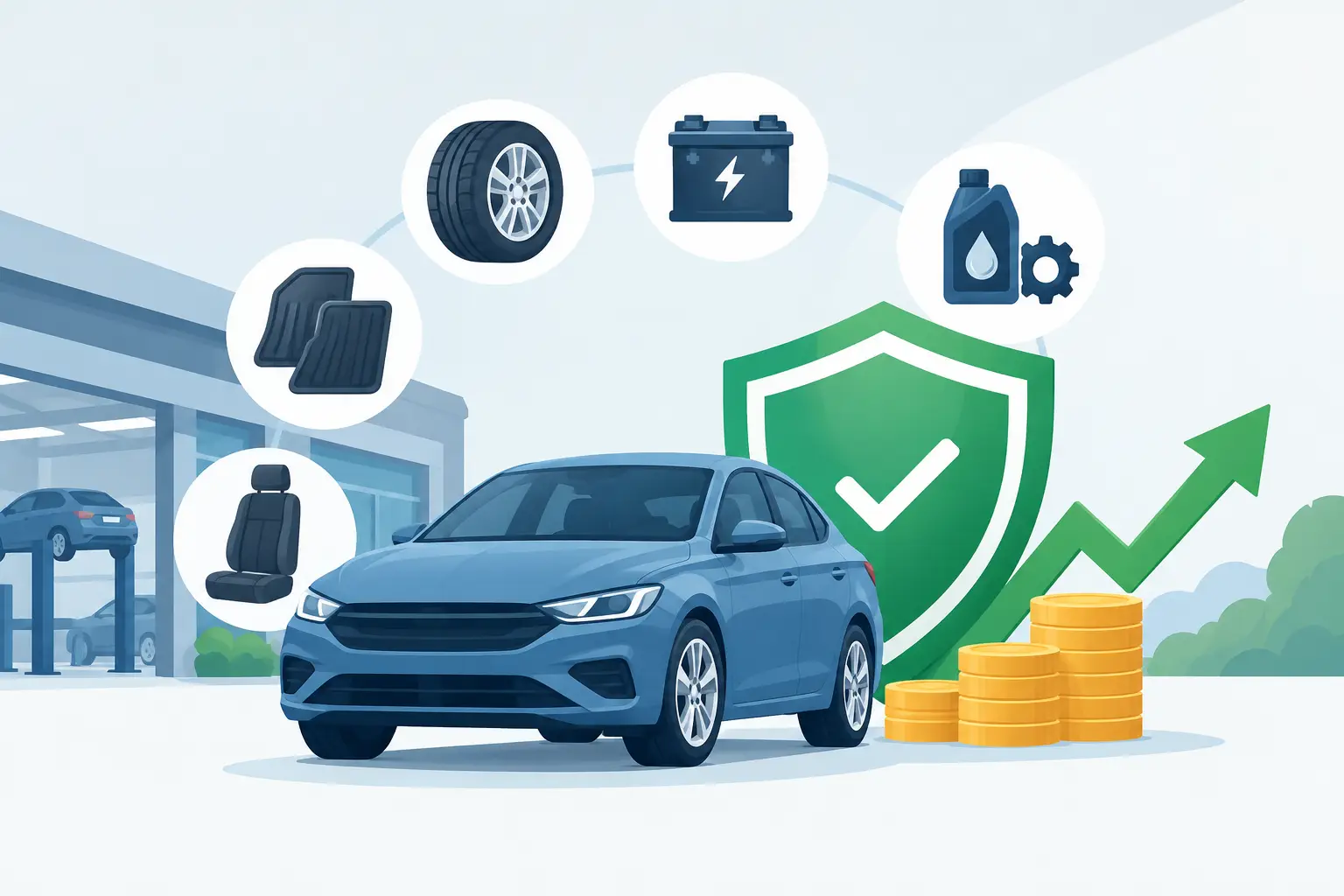
A vehicle can be financed, insured, and under warranty, yet a serious repair event can still put a customer in a difficult position: the vehicle is unavailable, transportation costs rise, and the monthly payment remains due. That gap is where automotive ancillary trends are changing the conversation for dealers, lenders, lessors, and BHPH operators.
The strongest ancillary products are no longer judged only by their penetration rate at delivery. Decision-makers want products that create meaningful customer value after the sale while protecting revenue, encouraging payment continuity, and giving customers a reason to return to the dealership. The result is a market moving beyond commodity add-ons and toward ownership-focused protection.
Why the Ancillary Conversation Has Changed
For years, F&I product discussions centered on familiar categories: service contracts, GAP, maintenance, tire and wheel coverage, and appearance products. Those products remain relevant, but they do not solve every financial pressure a customer faces when a vehicle becomes unusable.
Vehicle ownership has become more expensive from multiple directions. Payments are higher, repair costs have increased, and many households have limited room in their monthly budgets for an unexpected disruption. A customer may have comprehensive coverage and still face out-of-pocket transportation expenses, lost time, or a payment due date while waiting for repairs or a total-loss settlement.
For a lender or lessor, that disruption can become a payment-performance concern. For a dealership, it can become a customer-retention problem. For a BHPH operation, it may become an immediate collections issue. Ancillary products that acknowledge this real-world pressure are gaining attention because they address a problem customers understand without requiring a complicated explanation.
Automotive Ancillary Trends Moving Toward Real-Life Relief
Payment protection is becoming a stronger value story
The most significant shift is the growing emphasis on payment-related support. Customers do not simply think about the cost of a repair. They think about whether they can keep up with all of their obligations while their vehicle is off the road.
A product that reimburses a monthly vehicle payment following a covered event can offer a clear, practical benefit. It helps protect the customer during a disruptive ownership event and gives the finance partner a more compelling customer-care story. The value is especially relevant in portfolios where payment pressure can escalate quickly after a vehicle accident, mechanical breakdown, or other covered event.
This does not replace traditional products. It fills a different gap. GAP addresses a balance shortfall after a total loss. A service contract can help with covered repair costs. Car payment reimbursement addresses the continuing financial obligation that can remain when the vehicle cannot be used.
Customer retention is moving beyond the first service visit
Retention has always mattered, but automotive businesses are paying closer attention to the entire ownership lifecycle. A satisfied buyer is more likely to return for service, buy again, renew a lease, or speak positively about the dealership. A buyer who feels abandoned after a problem may do the opposite.
Ancillary products can help create a better recovery experience when a customer is frustrated and financially strained. The product itself must be easy for the customer to understand, and the claims or reimbursement process must be handled with care. If it is, the dealership is not merely seen as the place that sold the vehicle. It becomes a partner that provided meaningful support when the customer needed it.
That distinction matters in competitive markets where inventory, pricing, and financing options can look similar from one retailer to the next.
Service-center connection is gaining strategic value
Dealers are also looking for ancillary programs that support fixed operations. The sale of a vehicle is one transaction. Service and repair relationships can produce value for years. When a protection program encourages customers to return to the selling dealer or dealer service center, it supports retention where it counts: after delivery.
This benefit depends on execution. Service advisors, F&I managers, and sales teams need to understand what the membership does and how customers can use it. A product cannot create service traffic if employees treat it as a line item rather than part of the ownership experience.
The best approach is to position the program honestly: it provides specified benefits during covered vehicle-unusable events, while the dealership remains available to help the customer navigate the next steps. That message protects trust and reinforces the value of doing business with the original retailer.
Measurable performance is replacing vague product enthusiasm
Program administrators and lender executives increasingly expect more than a sales pitch. They want to know how an ancillary product contributes to revenue per retail unit, attachment rates, customer satisfaction, portfolio behavior, and repeat business.
That does not mean every benefit can be reduced to a single number. Customer goodwill has value even when it is difficult to isolate in a report. Still, partners should establish practical measures before launch. They may monitor product penetration, cancellation activity, reimbursement utilization, repair-order return rates, delinquency trends, and repeat customer activity over time.
The right metrics depend on the business model. A franchised dealer may place greater weight on service retention and F&I gross. A credit union may focus on member experience and payment stability. A BHPH dealer may prioritize payment performance and customer contact. The product should fit the operating goal, not just the menu.
What a Strong Ancillary Program Must Deliver
A growing catalog is not automatically a better catalog. Too many overlapping products can confuse customers, slow the F&I process, and make training harder. The better strategy is to select products with distinct purposes and simple, defensible value propositions.
For payment-focused memberships, clarity is essential. Customers should understand what a covered event is, when their vehicle must be unusable, how the payment reimbursement works, and what additional benefits may be available. They should also understand that a membership program is not insurance when that is the case. Precise disclosures protect the customer, the selling partner, and the program itself.
Training matters just as much as product design. F&I personnel should not rely on fear-based selling or broad promises. They should explain the likely customer scenario: “If a covered event leaves your vehicle unusable, this membership can help reimburse your car payment and provide support for immediate travel and miscellaneous expenses.” That is straightforward, relevant, and easier to present consistently.
The Trade-Offs Partners Should Consider
Not every ancillary product is right for every portfolio. Payment protection may be particularly valuable for customers with higher monthly obligations or less flexibility in their household budget, but the offer still needs to align with underwriting standards, program rules, and the customer profile.
Price sensitivity is another factor. A lower-priced product may improve participation, while a higher-benefit product may produce greater gross per deal. There is no universal answer. Partners should test their presentation, evaluate results, and avoid assuming that the most expensive option or the lowest price point will perform best.
Compliance also cannot be treated as an afterthought. Marketing language, sales scripts, disclosures, enrollment processes, and reimbursement administration should all match the actual program terms. A product earns long-term value when customers receive exactly the type of support they were told to expect.
Turning the Trend Into a Revenue Opportunity
The opportunity in automotive ancillary products is not simply to add another menu item. It is to offer protection that addresses a customer problem while supporting the business outcomes that matter to your organization.
CPR For Cars was built around that model. Its membership can reimburse a customer’s monthly car payment when a covered event leaves the vehicle unusable. During the first year, it can also provide up to $500 for immediate travel and miscellaneous expenses, along with up to $1,000 toward a replacement vehicle after a total loss based on the customer’s down payment with the original dealer.
For selling partners, that creates a differentiated aftermarket offer with a direct ownership benefit. It can support customer goodwill, payment continuity, dealership service-center return traffic, and additional backend revenue without positioning the membership as traditional insurance.
The next product your team adds should have a job to do. Choose one that gives customers a credible reason to feel protected after delivery and gives your business a measurable reason to keep offering it.










Leave A Comment