
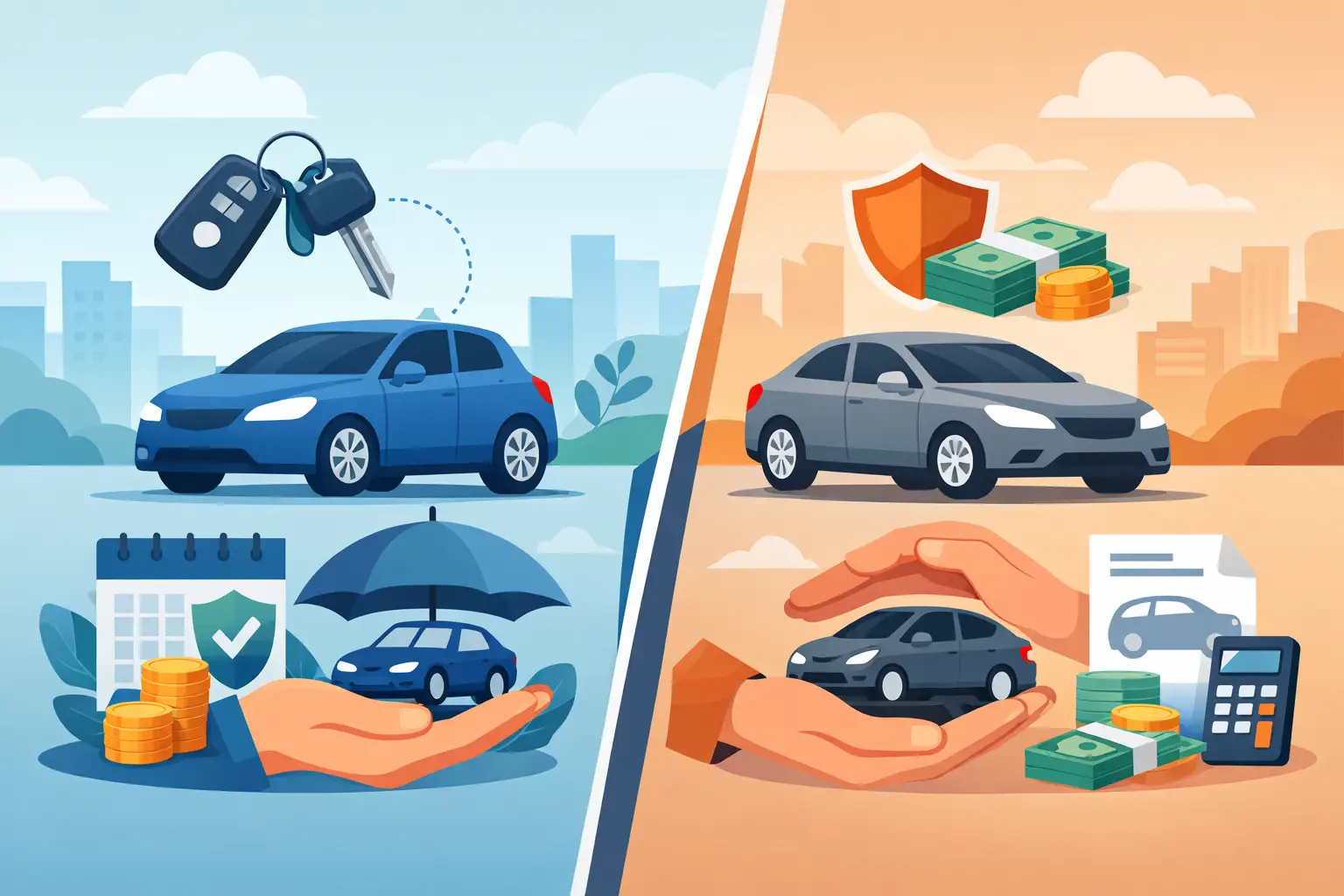
A customer can be current on every payment, keep full coverage, and still face a serious financial gap when a vehicle becomes unusable after a covered event. The monthly obligation does not pause simply because the customer cannot drive the car. That is where lease protection vs finance protection becomes a practical product and portfolio conversation, not just a menu-label decision.
For lenders, lessors, dealerships, and BHPH operators, the right protection offering can support payment continuity while giving customers a clear reason to stay engaged with the originating business. The wrong approach is treating every product called “protection” as interchangeable. Lease and finance customers have different contractual obligations, different end-of-term concerns, and different reasons to need help.
Lease Protection vs Finance Protection: Start With the Contract
A lease is a use agreement. The lessee makes scheduled payments for the right to use a vehicle over a defined term, then returns it, buys it, or moves into another vehicle. A finance agreement is an ownership path. The borrower repays the amount financed, typically with interest, until the loan is satisfied.
That distinction shapes the customer conversation. Lease-focused protection often centers on the risks that arise from returning a vehicle or ending a lease early, such as excess wear, excess mileage, remaining payments under certain circumstances, or the gap between an insurance settlement and a lease balance. Finance-focused protection is more likely to address loan balance exposure, payment hardship, mechanical breakdown, or events that affect the borrower’s ability to keep making payments.
Still, labels can be misleading. “Lease protection” and “finance protection” are not standardized product categories. Two providers may use the same name for benefits with very different triggers, limits, exclusions, and claims processes. Partners should evaluate the actual member benefit, not the headline on the sales menu.
The Payment Disruption Gap Both Customers Share
Whether a customer leases or finances, a disabled vehicle can create a two-front problem. The customer may need transportation, towing, lodging, rideshare, or other immediate support. At the same time, the scheduled lease or loan payment remains due.
Traditional auto insurance may address physical damage to the vehicle, subject to coverage, deductibles, and claims timing. It does not automatically solve the customer’s monthly payment obligation while the vehicle is out of service. GAP products can be valuable where a total loss settlement falls short of a balance, but GAP is not designed to reimburse regular payments during a covered disruption.
This is the operational opening for payment reimbursement protection. A membership benefit that reimburses the customer’s monthly car payment when a covered event leaves the vehicle unusable addresses an expense customers understand immediately. It can help stabilize the account during a stressful period and reduce the pressure that can lead to missed payments, strained collections conversations, or damaged goodwill.
For the partner, that means the benefit is not merely an add-on. It is a customer-care tool with a direct connection to portfolio performance.
Where Lease Protection Is Usually Strongest
Lease customers are often especially responsive to protection that reduces uncertainty around the end of the agreement. They may be concerned about wear-and-tear charges, mileage overages, accidental damage, or the consequences of a total loss before the scheduled lease end.
Those benefits are relevant, but they do not fully answer the question a lessee asks after a serious accident or covered breakdown: “How do I handle this month’s payment while I am without the vehicle?” A lease customer still has a recurring obligation and may be juggling replacement transportation before the lease account is resolved.
A payment reimbursement membership can complement lease-specific products by focusing on the disruption itself. For example, when a covered event leaves the vehicle unusable, a qualifying reimbursement of the monthly payment gives the customer immediate financial breathing room. Benefits for travel and miscellaneous expenses can add meaningful first-year support, while a replacement-vehicle benefit after a total loss can help keep the customer connected to the selling dealer or leasing source.
The value is strongest when the sales team clearly separates what each product does. Lease-end protection helps with defined return-related exposures. Payment reimbursement helps address an active payment obligation after a covered loss of use. One is not automatically a substitute for the other.
Where Finance Protection Can Deliver More Portfolio Value
Finance customers typically think in terms of affordability, ownership, and keeping the vehicle on the road. Their concerns may include negative equity, loan payoff exposure, repair costs, job loss, or payment interruption after an unexpected vehicle event.
For finance partners, a payment-focused benefit can be particularly relevant because payment behavior is central to account health. If a customer’s car is disabled and the household budget is already tight, the auto payment can become vulnerable even when the customer fully intends to pay. A reimbursement benefit tied to a covered event helps protect the customer from that immediate strain.
This is especially meaningful in used-vehicle and BHPH environments, where customers may have less access to backup transportation and less room in the monthly budget. It also applies to prime portfolios. A borrower with strong credit may still resent making a payment on a vehicle they cannot use, and that frustration can damage the ownership experience.
The business case is straightforward: help customers through a disruption before it becomes a payment problem. Better customer experiences can support retention, reduce avoidable friction, and create a stronger reason for the customer to return for service, replacement, or their next purchase.
Compare Benefits, Not Product Names
Before adding any lease or finance protection product, decision-makers should pressure-test the offer against the situations their customers actually face. Four questions will reveal whether a product belongs in the F&I office, lender program, or lease portfolio:
- What event triggers the benefit, and is “vehicle unusable” defined clearly?
- Does the product address a recurring payment, a balance deficiency, a lease-return charge, immediate expenses, or only one of these needs?
- What are the reimbursement limits, waiting periods, documentation requirements, and exclusions?
- Does the product give the partner a measurable revenue opportunity while improving customer retention and service-center return traffic?
These questions matter because a broad product name can hide a narrow benefit. A lease-return waiver may offer little help when a customer needs transportation today. A balance-protection product may not reimburse the payment due next week. A useful program states the covered customer outcome in plain language and gives the sales team an explanation they can deliver with confidence.
Build a Layered Menu, Not a One-Product Answer
The strongest strategy is rarely choosing lease protection or finance protection as if one eliminates the need for the other. A well-built menu matches protection to the customer’s contract and then fills the remaining gaps.
For a lessee, that may mean pairing a lease-oriented benefit with payment reimbursement for covered loss-of-use events. For a financed buyer, it may mean combining appropriate balance protection with a payment continuity benefit. The exact design depends on the partner’s market, vehicle mix, risk tolerance, customer profile, and compliance requirements.
Sales training is essential. Representatives should avoid presenting a membership as insurance when it is not insurance, avoid promising benefits beyond the agreement, and explain the claims process accurately. Clear disclosures protect the customer, the partner, and the credibility of the entire program.
CPR For Cars is built for this practical gap: a non-insurance membership designed to reimburse a customer’s monthly car payment when a covered event leaves the vehicle unusable. It can also provide up to $500 for immediate travel and miscellaneous expenses in the first year and up to $1,000 toward a replacement vehicle after a total loss, based on the customer’s original down payment with the dealer. For partners, that turns a customer relief benefit into a differentiated, revenue-generating aftermarket offering.
Put Protection Where It Changes the Outcome
The most effective protection conversation does not begin with a generic product label. It begins with a real customer scenario: the vehicle is down, the payment is due, and the customer needs a workable path forward. From there, a dealer, lender, or lessor can identify whether lease-end exposure, finance-balance exposure, payment disruption, or a combination of needs deserves protection.
When the benefit is easy to understand and tied to a problem customers recognize, it supports more than an additional line item. It gives your team a credible way to protect customers when they are most likely to remember who stood behind them.









Leave A Comment