
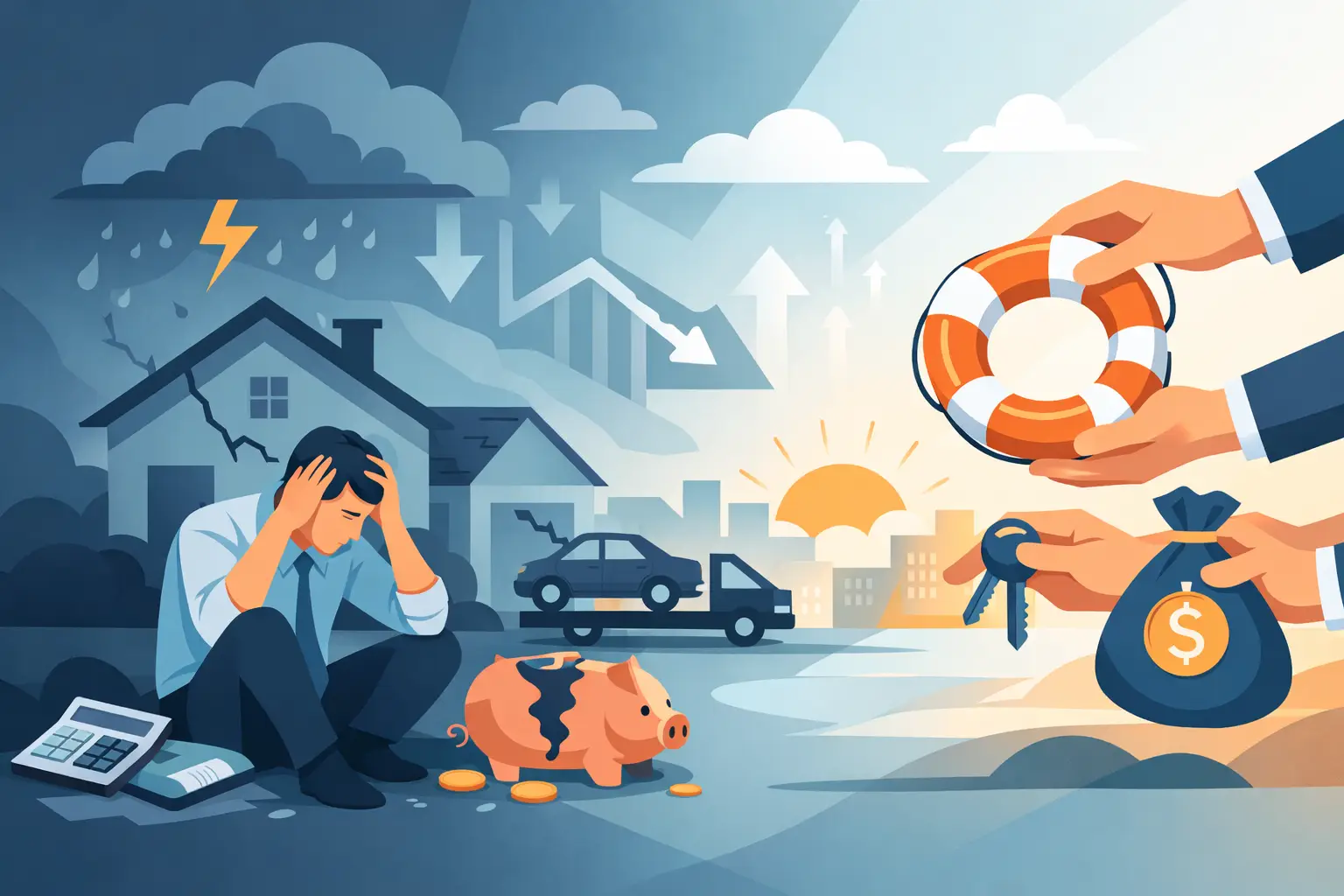
A customer’s car goes down on Tuesday. By Friday, the bigger problem often is not the repair order – it is the payment due date.
That is the real answer behind what helps borrowers after breakdown. Most customers do not just need a tow, a diagnosis, or a ride to work. They need financial breathing room while the vehicle is unusable. For lenders, lessors, dealerships, and BHPH operators, that gap matters because vehicle trouble can quickly turn into payment trouble, customer frustration, and portfolio risk.
What helps borrowers after breakdown in real life
When a vehicle breaks down, the borrower is usually hit from two directions at once. The first is the mobility problem. They still need to get to work, take kids to school, make medical appointments, and handle daily life. The second is the financial problem. The car payment does not stop just because the vehicle is sitting in a service bay.
That combination is where borrower stress escalates. A customer may face repair costs, rideshare expenses, rental charges, lost work hours, and a monthly payment that still lands on schedule. Even responsible customers can fall behind when transportation disruption turns into a cash flow problem.
So what actually helps? Practical support that addresses both sides of the event. That includes immediate help with travel and miscellaneous costs, along with reimbursement tied to the monthly vehicle payment when a covered event leaves the car unusable. If the event becomes more severe and ends in a total loss, help with replacement can also make a meaningful difference.
These are not small extras. They directly support payment continuity and customer confidence during one of the most disruptive points in the ownership cycle.
Why traditional solutions are often incomplete
Many automotive businesses assume the customer already has some protection in place. Sometimes they do. But the problem is that most products solve only one part of the disruption.
A service contract may help with certain repair costs, but it does not automatically solve the borrower’s next payment. GAP may address a deficiency balance after a total loss, but it does not help much during the period when the customer is stranded and still trying to stay current. Insurance may cover certain damages, but deductibles, exclusions, delays, and claim timing can leave the customer short on cash when they need it most.
That is why the question of what helps borrowers after breakdown should be framed more precisely. The best answer is not just repair coverage. It is payment support during vehicle unusability.
For automotive finance businesses, that distinction matters. If the borrower has a tool that helps preserve their ability to make the payment, the business has a stronger chance of protecting account performance and customer goodwill at the same time.
Payment reimbursement changes the conversation
When customers are dealing with a breakdown, they are not thinking in product categories. They are thinking, How do I keep moving, and how do I keep paying?
A payment reimbursement membership addresses that concern more directly than many traditional aftermarket products. It gives the customer a clear value proposition tied to the monthly obligation they already worry about most. If a covered event makes the vehicle unusable, reimbursement of the monthly payment can relieve pressure at exactly the moment when payment behavior is most vulnerable.
That support does more than reduce stress. It can help prevent a temporary transportation failure from becoming a delinquency issue. For lenders and dealers, that means fewer avoidable interruptions, stronger customer relationships, and a more practical story to tell at the point of sale.
In other words, the product is not simply about sympathy. It is about stabilizing the customer during a predictable ownership disruption.
Immediate expense support matters too
Borrowers rarely experience breakdown costs one at a time. They pile up fast.
A customer may need a hotel, a rental, a train ticket, a rideshare, or money for unexpected day-to-day expenses while the car is down. Even a modest reimbursement for immediate travel and miscellaneous costs can make a major difference in how manageable the event feels.
This is where many programs either help in a meaningful way or miss the mark. If support starts only after a long process, or only covers one narrow category, it may not match the customer’s real-world problem. Practical first-year reimbursement for immediate expenses gives the borrower something usable, not theoretical.
Total loss support has a downstream effect
If the breakdown event leads to a total loss or another severe outcome, replacement becomes the next issue. Borrowers who do not have enough cash to get back into a vehicle may be sidelined longer, which creates more disruption for them and more uncertainty for the finance partner.
Assistance toward a replacement vehicle can help preserve the customer relationship and improve the odds of keeping that customer in the automotive ecosystem connected to the originating dealer, lessor, or lender. It also supports the kind of return traffic and repeat opportunity that smart operators want to protect.
The business case is stronger than it first appears
For automotive businesses, borrower relief products are often evaluated through a narrow lens. Will customers see value? Will F&I be able to present it clearly? Will it create compliance headaches? Those are fair questions, but they are not the whole picture.
A product centered on what helps borrowers after breakdown can contribute in several ways at once. It can create backend revenue per deal. It can differentiate the offering in a crowded market. It can support customer retention by helping people through a high-stress event. And it can reinforce payment continuity when the account is most likely to wobble.
That combination is commercially valuable.
A borrower who feels supported is more likely to stay engaged. A customer who avoids a payment interruption is better for the portfolio than one who needs collection effort after a preventable disruption. A dealer with a membership product tied to real ownership pain points has a more credible, more profitable menu story than a store offering only generic protection products.
There is also a service-lane advantage. Programs built around vehicle unusability can encourage customers to reengage with the selling dealer or affiliated service center, creating residual business instead of one-time revenue.
What decision-makers should look for in a solution
Not every borrower protection product is equally useful. The strongest programs are easy to explain, easy to position, and tied to a customer problem that sales and finance teams see every day.
Decision-makers should look for a structure that keeps the message simple. If the vehicle becomes unusable because of a covered event, the customer receives reimbursement support. That is easier to communicate than complex technical language or abstract future benefits.
They should also look at whether the program produces both customer and business value. A product that sounds good but does not support revenue, retention, or account performance will struggle to stay prioritized. On the other hand, a product that protects customers and the bottom line deserves a place in the deal.
It also helps to assess fit by channel. For franchised dealers, the value may show up in F&I income and future service-center traffic. For lenders and credit unions, the appeal may be payment continuity and borrower goodwill. For BHPH dealers, the protection can be especially relevant because transportation interruptions often affect collections quickly and directly.
The right answer depends on the portfolio and customer base. But across channels, the central issue stays the same: customers need help when the car cannot be used and the payment still exists.
Why this resonates at the point of sale
Customers understand breakdown risk without a long explanation. They know repairs happen. They know accidents happen. They know transportation problems can throw off a whole month.
That makes this category easier to position than products built around remote possibilities or technical fine print. The customer can immediately connect the benefit to a real fear: I still owe the payment even if I cannot drive the car.
That clarity supports stronger presentation and better acceptance, especially when sales teams explain the program in plain language. A membership such as CPR For Cars works because it connects the ownership event to the payment obligation in a way customers can grasp quickly.
For businesses, that means less friction in the conversation and more confidence in the offer.
A smarter standard for borrower protection
The industry does not need more products that sound good in the menu but disappear when the customer’s stress peaks. It needs solutions tied to the moments that actually threaten payment behavior, loyalty, and portfolio health.
If you are asking what helps borrowers after breakdown, start with the borrower’s real exposure. They need transportation help, immediate expense relief, and support with the payment they still owe while the vehicle is unusable. When a product addresses that reality, it does more than add value to the deal – it protects the relationship after the sale.
That is where strong customer care and smart business performance finally meet.









Leave A Comment