
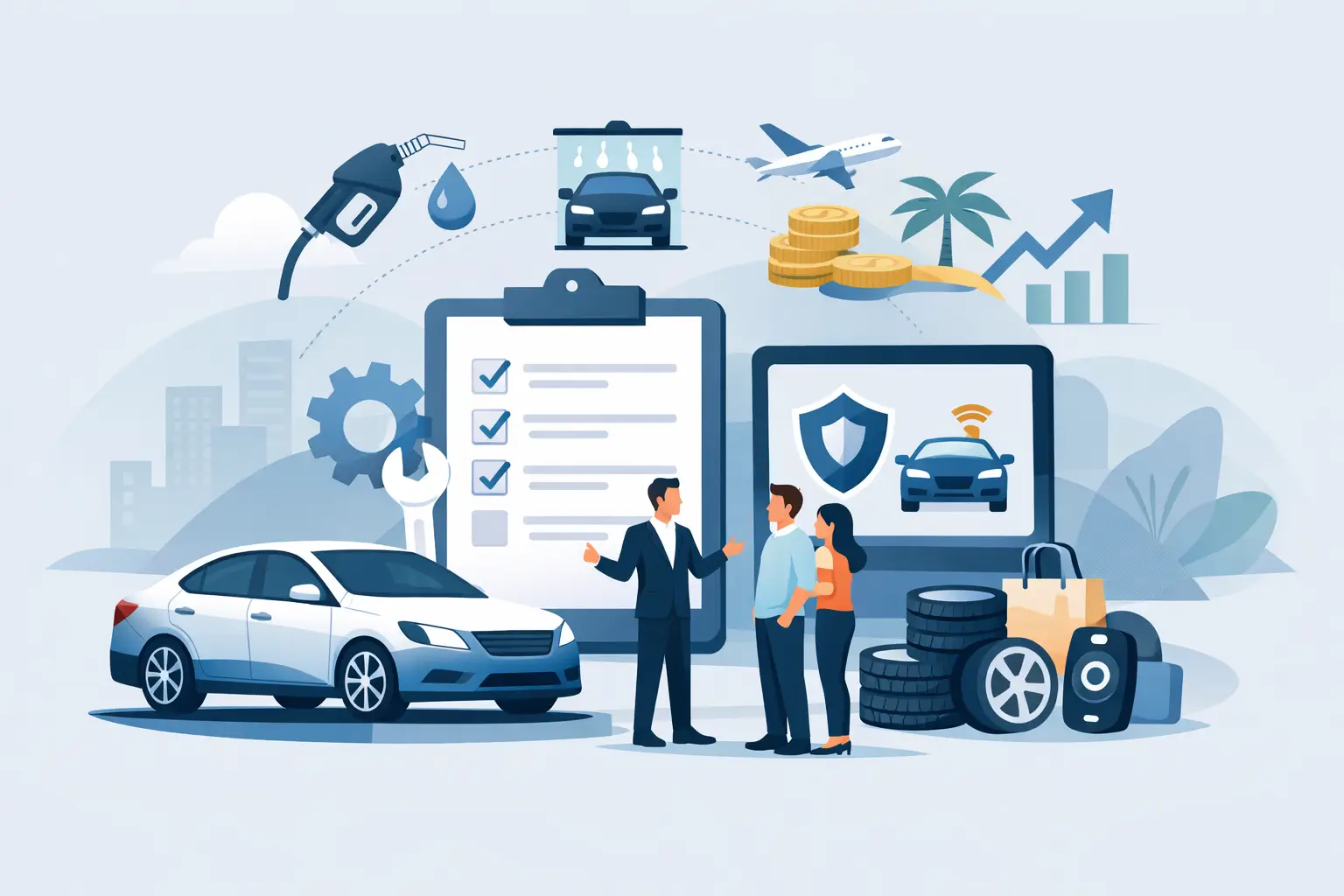
Front-end gross gets the attention, but fixed margins and rate pressure keep pushing more stores, lenders, and lessors to ask the same question: where can we build stronger profit without weakening the customer experience? A smart guide to automotive ancillary revenue starts there. The best ancillary products do more than add income per deal – they support payment stability, improve retention, and give customers a reason to stay connected to the selling dealer or finance partner after delivery.
This matters because ancillary revenue is no longer just an F&I discussion. It affects portfolio performance, service traffic, lease and loan satisfaction, and how well your business holds onto customers when ownership gets inconvenient. If a product only boosts a one-time sale but creates confusion, claim frustration, or weak value perception, it can cost more than it makes.
What automotive ancillary revenue really means
Automotive ancillary revenue is the income generated from products and programs sold alongside the vehicle, financing, or lease. That can include protection products, service-related memberships, maintenance offerings, debt-related protections, appearance packages, and other add-ons that extend beyond the base transaction.
The mistake many operators make is treating every ancillary product as interchangeable. They are not. Some are margin plays. Some are retention tools. Some help reduce customer disruption during a difficult ownership event. The strongest programs do at least two jobs at once.
For dealerships, ancillary revenue often shows up as higher profit per retail unit and better absorption of margin pressure. For lenders and lessors, it can also support payment continuity and customer goodwill. For buy-here-pay-here operators, the right product can help reduce the fallout that happens when a customer loses the ability to use the vehicle and starts missing payments soon after.
A practical guide to automotive ancillary revenue strategy
A good ancillary strategy starts with one question: what problem does this product solve for both the customer and the business? If the answer is vague, the product usually underperforms.
The most durable ancillary revenue comes from products that are easy to explain, easy to position, and easy for the customer to value in real life. Customers do not buy add-ons because a menu says they should. They buy when the product clearly protects their budget, their mobility, or their ownership experience.
That is why event-based reimbursement products can be especially powerful in the automotive finance and leasing space. When a covered event leaves a vehicle unusable, the customer does not just face inconvenience. They may still owe a monthly payment while also trying to cover travel, transportation, or replacement costs. That financial disruption affects the customer first, but it can quickly affect the lender, lessor, or dealer as well.
A product built around payment reimbursement addresses a real pain point with a clear business case behind it. It gives the customer tangible relief while helping protect the payment stream and maintain trust in the selling relationship. That is a very different proposition than an add-on with weak usage or unclear value.
What separates strong ancillary products from weak ones
High-performing ancillary products share a few practical traits. First, they solve a recognizable problem. Second, the benefit can be explained in one or two sentences by a sales or F&I team. Third, the business can see downstream value, not just upfront revenue.
Weak products usually fail on one of those three points. They may have decent margins, but if the customer does not understand the value, penetration drops. If the team struggles to explain the benefit naturally, presentations become inconsistent. If the business only earns at sale and gains no retention, service, or portfolio advantage, the product becomes easier to replace.
There is also a trade-off between product quantity and product quality. Some stores try to stack too many options into the customer conversation and end up diluting all of them. A tighter ancillary lineup often performs better, especially when each product has a distinct purpose. One may protect the vehicle. Another may protect the customer’s payment obligation during a disruptive event. Another may support long-term maintenance behavior. Clarity sells.
Where ancillary revenue creates the most value
For dealers, ancillary revenue is often measured in per-copy gross. That is fair, but incomplete. A better view looks at total value creation. Does the product encourage return visits to the service center? Does it strengthen CSI by helping customers during a stressful situation? Does it create a more differentiated ownership offer than the store down the street?
For lenders and lessors, the conversation gets more strategic. A borrower or lessee dealing with an unusable vehicle is more likely to experience payment stress, dissatisfaction, and possible attrition. Products that help address that disruption can support better customer outcomes and a healthier relationship through the term of the contract.
For BHPH dealers, the value can be even more immediate. Vehicle downtime often becomes payment downtime. Ancillary products that help customers through interruption events are not just added income. They can become part of a broader account protection strategy.
How to evaluate an ancillary product before you add it
The first screen is simple: is the benefit real, relevant, and timely? If a customer needs a long explanation to understand why the product matters, your sales team will struggle to produce consistent results.
The second screen is operational. Ask how the program fits into your current delivery process. Can F&I managers explain it quickly? Can your lender or lease partner integrate it without friction? Will your administrators and compliance teams be comfortable with the positioning and documentation? Practical fit matters as much as product appeal.
The third screen is performance-related. Look beyond margin. Evaluate expected penetration, customer usefulness, claim or reimbursement experience, retention impact, and whether the product supports your brand promise. If your business says it protects customers, the product should prove that when ownership gets difficult.
This is where a membership-based reimbursement model can stand out. It is not trying to imitate every other aftermarket option. It gives partners a monetizable offering with a direct consumer benefit tied to vehicle unusability and associated disruption. That creates a cleaner sales story and a stronger business case.
Training is what turns ancillary revenue into real profit
Even the right product underperforms without the right presentation. Sales teams should not be taught scripts alone. They should be taught problem-solution selling.
That means connecting the product to real ownership scenarios. If a customer cannot use the vehicle after a covered event, what happens to their payment? What happens to their transportation budget that week? What happens to the relationship with the dealer or finance company if they feel stranded? When teams understand the customer problem, their presentation becomes more credible and more effective.
Managers also need to track more than unit sales. Watch penetration by producer, cancellation patterns, chargeback exposure, and customer feedback. Strong ancillary revenue is not accidental. It is managed.
The future of automotive ancillary revenue
The next phase of ancillary growth will favor products with a clearer connection to customer hardship, ownership continuity, and long-term account value. Commodity add-ons will keep facing pressure. Decision-makers want more than another line item on the menu. They want products that protect revenue and reinforce loyalty.
That shift favors offerings that align customer relief with business performance. A program like CPR For Cars fits that direction because it gives partners a differentiated way to generate backend income while helping customers handle a disruptive vehicle event. That is easier to defend internally, easier to explain in the showroom, and more meaningful when the ownership experience takes a turn.
If you want ancillary revenue that lasts, do not start with what pays the most on paper. Start with what protects the customer and your bottom line at the same time. That is usually where the strongest profit stays.






Leave A Comment