
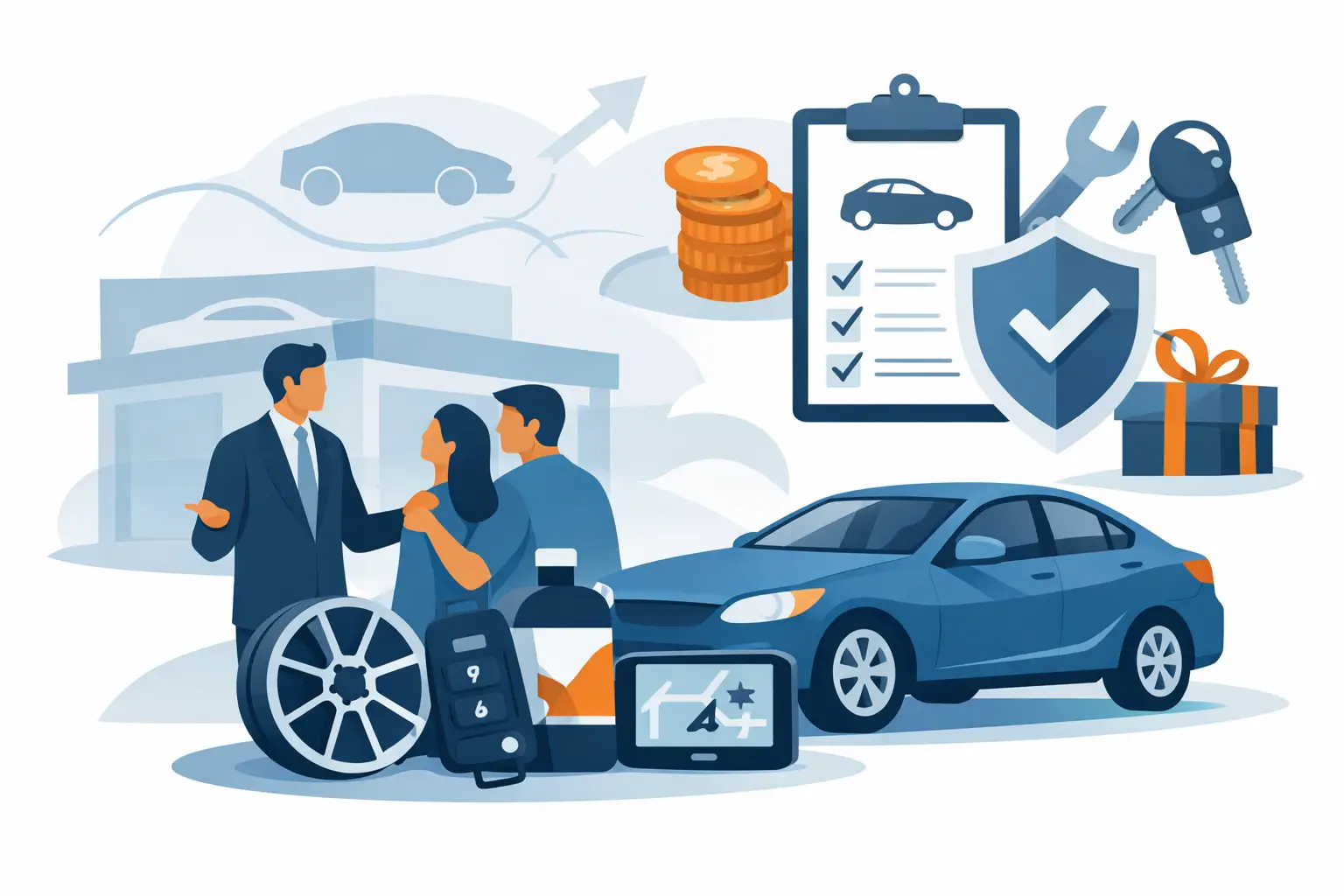
The difference between an average F&I menu and a high-performing one usually is not effort. It is product fit. Dealers can present the same number of options, train the same staff, and still get very different results depending on whether their aftermarket products for dealerships actually solve problems customers feel and whether those products support the store’s long-term revenue goals.
That is where many product strategies break down. Too many stores stack familiar products without asking a harder question: does this offering protect the customer in a way that also protects the dealership, lender, or lessor? The best-performing products do both. They create immediate value at the point of sale, and they keep working after delivery by supporting retention, payment stability, service traffic, and goodwill.
What makes aftermarket products for dealerships worth selling
A strong aftermarket portfolio should do more than add gross to a deal. It should reduce friction in ownership and give the customer a reason to stay connected to the dealership after the sale. If a product only looks good on a menu but produces low claims usage, weak customer understanding, or little operational value, its ceiling is limited.
The better question is not simply which products sell. It is which products continue to matter when real life hits. Vehicle breakdowns, accidents, tire damage, key loss, and payment stress all affect the ownership experience. Products that address these moments tend to generate stronger acceptance because the value is easy to explain and easy for the customer to understand.
For dealerships, that matters beyond one transaction. The right product mix can improve backend revenue, support CSI, increase return visits, and give sales and F&I teams a more credible story to tell. It can also help lenders and leasing partners reduce the fallout that comes when a customer is paying on a vehicle they cannot use.
The categories that usually belong on the menu
Most dealerships build their aftermarket strategy around a few proven categories. Vehicle service contracts remain a core product because repair costs are rising and customers want protection against major mechanical expenses. GAP stays relevant in high-LTV deals, long-term financing, and fast-depreciating segments. Tire and wheel, key replacement, dent and ding, windshield, and prepaid maintenance all have a place when they match the vehicle profile and buyer needs.
These products are familiar for a reason. They address common ownership risks, and many customers already understand the concept. But familiarity is not the same as differentiation. If every store in your market offers the same protection lineup with the same basic pitch, the menu becomes a commodity. Margin pressure follows.
That is why more operators are taking a closer look at membership-style offerings and non-insurance protection products that add a different kind of value. Instead of focusing only on repair or replacement, these programs can address the customer’s financial disruption when a covered event makes the vehicle unusable. That distinction matters, especially in a market where payment stress can affect account performance and customer loyalty very quickly.
Why payment-focused protection is gaining attention
A customer who loses access to a vehicle often faces two problems at once. First, they have the event itself – an accident, breakdown, or other covered issue. Second, they still owe a monthly payment even though the vehicle is sitting in a shop or has been declared a total loss. Traditional products may handle part of the physical loss, but they do not always address the cash-flow strain that follows.
That gap creates a real opportunity for dealerships, finance companies, lessors, and BHPH operators. Payment-focused aftermarket products for dealerships help customers manage the disruption that can turn a stressful event into a missed payment, a damaged relationship, or a lost future sale. From a business standpoint, that means the product is doing more than generating front-end or back-end income. It is supporting payment continuity and protecting the broader customer relationship.
This is one reason products like Car Payment Reimbursement are different from the usual menu add-ons. They offer practical financial relief when a customer cannot use the vehicle due to a covered event, while also giving dealers a monetizable product that strengthens goodwill and can encourage return traffic. That combination is commercially useful because it aligns customer care with dealership performance.
The real test: does the product support operations, not just gross
Many aftermarket products look attractive in a presentation. The harder test is whether they fit how a dealership actually sells, delivers, and services vehicles.
If a product is difficult to explain in under two minutes, F&I adoption may suffer. If claims handling creates confusion, customers may blame the store even when the issue sits elsewhere. If the product has little connection to future service or retention, its impact ends when the contract is signed.
Dealership decision-makers should evaluate every offering on three levels. First, can the sales or F&I team present it clearly and confidently? Second, does the customer immediately understand the benefit? Third, does the dealership gain something beyond the initial profit, such as stronger loyalty, better service-lane engagement, or reduced customer fallout after a disruptive event?
A product that checks only the first box can still sell. A product that checks all three can become a real strategic asset.
How to choose aftermarket products for dealerships by buyer type
Not every customer needs the same protection package, and not every dealership should force the same menu logic across all inventory and deal structures.
For prime buyers in new vehicles, service contracts, maintenance, and appearance protection may still anchor the conversation. For used vehicles, especially older inventory, reliability concerns often make service-related protection easier to position. For subprime and BHPH buyers, affordability and payment stability matter more. In those transactions, products tied to financial continuity can carry more weight because the customer is already balancing transportation needs with tighter monthly budgets.
Lease customers are another distinct group. Their concerns often center on excess wear, damage exposure, and staying mobile without interruption. A product that helps cushion the consequences of a covered event can fit naturally in that environment, especially when the leasing operation wants to preserve customer satisfaction through the lease term.
This is where rigid menu thinking can hold stores back. The strongest product strategy is not the longest menu. It is the one that matches the store’s inventory mix, customer credit profile, and ownership experience goals.
What dealers should ask before adding a new product
Before adding any new aftermarket offering, dealers should look past commission potential and ask operational questions that affect long-term performance.
How easy is the benefit to explain in plain language? Does the product solve a problem customers already worry about? Will it help the store stand out in a crowded market, or is it just another version of what every competitor already sells? Can it support retention, reinsurance objectives, lender relationships, or fixed-ops traffic? And just as important, does the provider position the product in a way that protects compliance and avoids confusion with insurance?
The trade-off is simple. Highly specialized products can be powerful differentiators, but only if the provider supports training and the value proposition is clear. Broad, traditional products may be easier to sell on volume, but they often do less to separate your dealership from the next one down the street.
Building a better menu without overwhelming the customer
There is a temptation to solve low penetration by adding more choices. Usually that creates the opposite problem. Customers tune out when every item sounds alike or when the conversation feels like a stack of unrelated upgrades.
A better approach is to build around ownership risks the customer can recognize immediately: repair costs, negative equity exposure, daily driving hazards, and payment disruption during a covered loss. When the menu follows the customer’s real-life experience, the conversation gets simpler. It also becomes easier for F&I managers to position value instead of rushing through features.
That kind of clarity helps close more product sales, but it also protects the dealership’s reputation. Customers are more likely to appreciate and use products they understood when they bought them.
The dealerships that win treat product strategy like profit strategy
Aftermarket is not a side conversation anymore. For many stores, it is one of the cleanest ways to defend gross, improve customer retention, and create a more resilient ownership experience. The strongest aftermarket products for dealerships are not just add-ons. They are tools that support the customer when things go wrong and support the business when margins are under pressure.
If a product can generate revenue, protect payment behavior, reinforce service relationships, and give the customer a clear reason to say yes, it deserves serious attention. That is the standard dealers should use. Protect your customers and your bottom line with products built to do both.





Leave A Comment