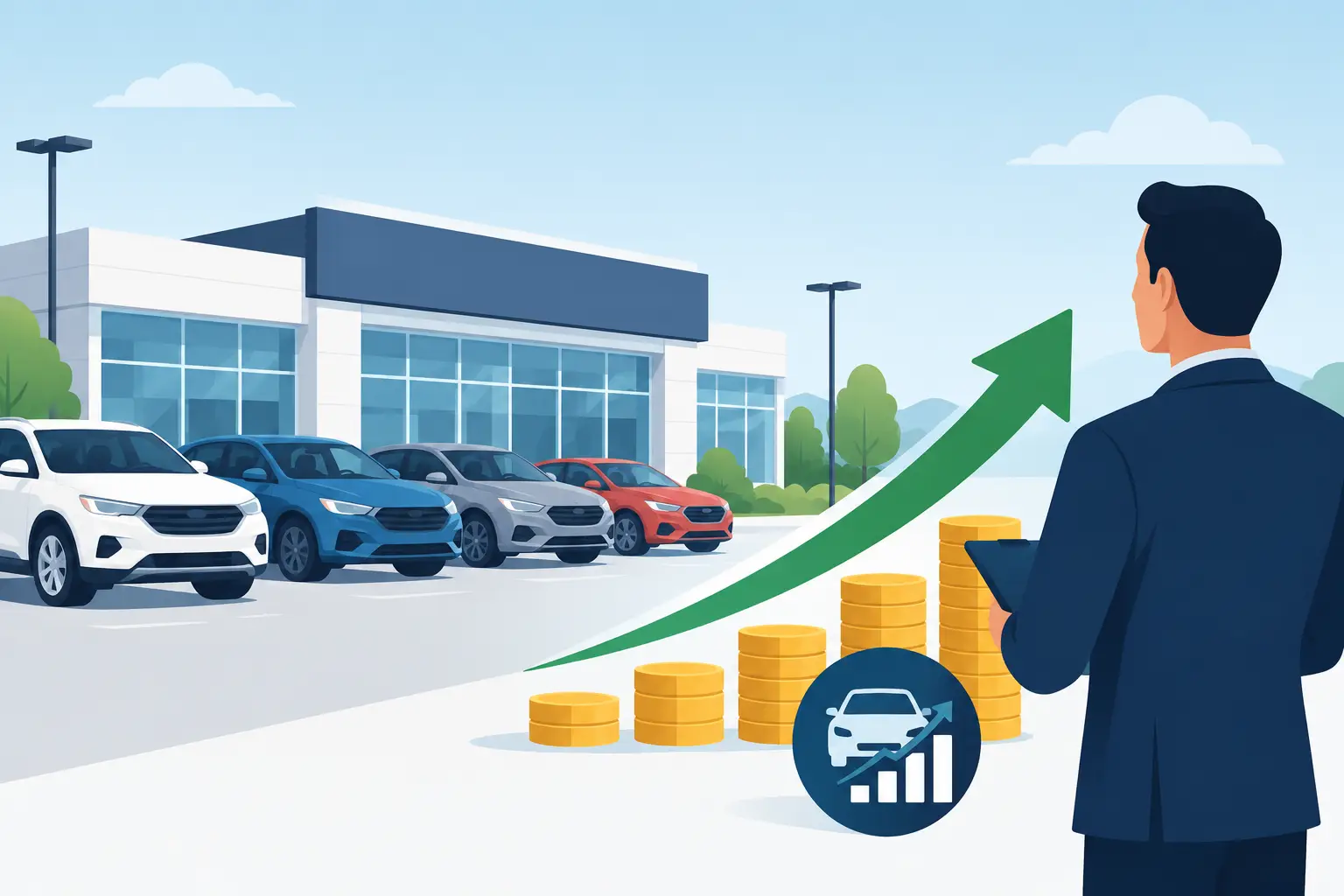
A sold vehicle should create more than one moment of gross profit. It should create an ownership relationship that protects the customer when disruption hits, gives your F&I department another meaningful revenue opportunity, and gives your service department a reason to see that customer again. That is how dealers can improve dealership profitability without relying solely on higher vehicle margins or more units.
The pressure is real. New and used vehicle margins move with inventory, interest rates, incentives, and local competition. Fixed operations can carry the business, but only when customers return. Meanwhile, customers facing an accident, theft, or a disabled vehicle may still have a monthly payment due – exactly when their finances are under the most strain.
The best profitability strategy addresses both sides of that moment: protect the customer from a payment disruption and build a stronger, more productive relationship with the dealership.
Stop Treating Profit as a Front-End Number
Vehicle gross matters, but it is only one part of the transaction. A dealership that measures success only by front-end margin can miss the larger opportunity in F&I product penetration, service retention, repeat purchases, and referral business.
A more durable model recognizes that buyers do not stop being customers once the paperwork is signed. Their first repair crisis, total loss, or major interruption in vehicle use becomes a test of whether the dealership delivered value beyond the sale. If the customer feels abandoned, the next service visit and vehicle purchase may go elsewhere. If they receive practical help, the dealership earns goodwill when it matters most.
That does not mean every product belongs on every deal. Customers have different budgets, vehicle usage patterns, and existing protections. The goal is not to stack products indiscriminately. The goal is to offer relevant protection that solves a real ownership problem while producing legitimate backend income.
Find the Leaks That Reduce Dealership Profitability
Before adding a new revenue stream, look at where your existing revenue is slipping away. Most stores see familiar patterns: inconsistent F&I presentations, weak product understanding on the sales floor, low service-lane retention after a major event, and little follow-up after delivery.
Inconsistent F&I execution
A product cannot perform if it is introduced as an afterthought. When one producer presents it confidently and another skips it, penetration becomes a matter of personality instead of process. Build a repeatable presentation that explains the customer problem first, then the benefit, the eligibility requirements, and the cost.
The most effective language is plain language. A customer understands, “If a covered event leaves your vehicle unusable, this membership may reimburse your monthly car payment,” far faster than a technical product description. Clear explanations also support compliance and help reduce buyer confusion after delivery.
Lost fixed-operations opportunities
When a vehicle is disabled, customers often make decisions under pressure. They may choose the closest repair facility, delay repairs because of cost, or disengage from the dealership entirely after a total loss. Those moments can remove future service revenue from your operation.
A customer protection program that includes travel or miscellaneous expense assistance can help relieve immediate stress. A benefit tied to replacement-vehicle support after a total loss can also keep the original selling dealer part of the customer’s next purchase conversation. The dealership is no longer just where the vehicle was bought. It becomes a resource during a difficult event.
Payment disruption and damaged customer relationships
For lenders, lessors, and buy-here-pay-here operators, a vehicle being unusable can create a payment challenge that has nothing to do with a customer’s willingness to pay. The customer may need transportation, repairs, a deductible, and time away from work while the scheduled payment continues.
A dealership may not control every part of that hardship, but it can offer a product designed to address it. That distinction can improve customer perception, support payment continuity, and give the F&I office a relevant reason to discuss protection before a crisis occurs.
Add Revenue That Delivers a Clear Customer Benefit
The strongest aftermarket products are not sold as abstract coverage. They are sold as a response to a recognizable risk. A buyer can picture a collision, a stolen vehicle, or a major mechanical issue that leaves the car unavailable. They can also picture the payment still appearing on their bank statement.
Car Payment Reimbursement is positioned around that exact gap. As a non-insurance membership program, it can reimburse a customer’s monthly car payment when a covered event leaves the vehicle unusable. It can also provide up to $500 for immediate travel and miscellaneous expenses during the first year, along with up to $1,000 toward a replacement vehicle after a total loss, based on the customer’s down payment with the original dealer and subject to program terms.
For the customer, the value is practical financial relief at a stressful time. For the dealership, the value is a monetizable F&I offering that can support revenue per retail or lease transaction, protect goodwill, and create a reason for the customer to return to the original dealer.
This approach works particularly well when the presentation is matched to the deal. A high-payment customer may respond to payment reimbursement. A lease customer may value the reassurance of support during a vehicle-loss event. A buy-here-pay-here customer may see immediate value in an option that recognizes how quickly a disabled vehicle can affect their household budget.
Make the Program Easy for Your Team to Sell
A good product can still underperform if the process is complicated. Your sales and F&I teams need a simple path from introduction to enrollment. Start by defining when the product is presented, who owns the presentation, and how the benefits are explained without overpromising.
Sales consultants should plant the seed early by explaining that the dealership offers ownership protections designed for unexpected events. F&I should then conduct the full needs-based presentation, answer questions, and provide the required disclosures. Service advisors should understand the program well enough to recognize members and direct them to the right contact when a covered event occurs.
Training should focus on real scenarios, not just product features. Ask your team to practice a conversation with a customer whose vehicle has been in an accident and whose next payment is due in five days. When employees understand the customer’s pressure, they present the product with more credibility.
Keep compliance at the center. Never describe a membership as insurance if it is not insurance. Avoid guarantees, broad promises, or statements that go beyond the written terms. A transparent explanation protects the customer, your employees, and the dealership’s reputation.
Measure More Than Product Penetration
Penetration is an important starting point, but it is not the full scorecard. To understand whether a program is helping your bottom line, review revenue per vehicle retailed, average F&I gross, cancellation patterns, claims or assistance utilization where available, and customer return activity after a disruptive event.
Track results by producer, vehicle type, lender source, and customer segment. A product may perform differently in prime versus subprime deals, new versus used vehicles, or retail versus lease contracts. That is useful information, not a reason to abandon the offering. It helps management improve training and target the right customer conversations.
Also watch fixed-operations behavior. Are participating customers returning to your service center after an incident? Are total-loss customers beginning their replacement-vehicle search with your dealership? These are longer-cycle results, but they often show the real strategic value of customer protection products.
Turn Customer Relief Into Long-Term Retention
A claim or assistance event should trigger a retention process, not simply an administrative handoff. Assign a dealership contact who can check in, help the customer understand next steps, and invite them back when the vehicle is ready for service or replacement discussions.
That follow-up must be helpful, not opportunistic. A customer dealing with a disabled vehicle does not need a hard sell. They need clear answers, empathy, and a dealership that acts like a partner. If a replacement vehicle becomes necessary, your store should be the first place they think to call because you were present when the situation became difficult.
Dealership profitability grows when customer care and revenue strategy work together. Build a process that gives buyers meaningful protection, gives your team a product they can confidently stand behind, and gives customers a strong reason to return when they need help most.





Leave A Comment